Shaped By What We MakeA talk on tools, interfaces and minds
This is the slide version of the talk I gave at Forward, Resend's conference, in October 2026. You can watch the video or read it below, slide by slide.
Before I start, I want to say that as designers, engineers and builders, we underestimate our power. We underestimate the influence we have. There are many reasons for that, but two are especially clear to me.
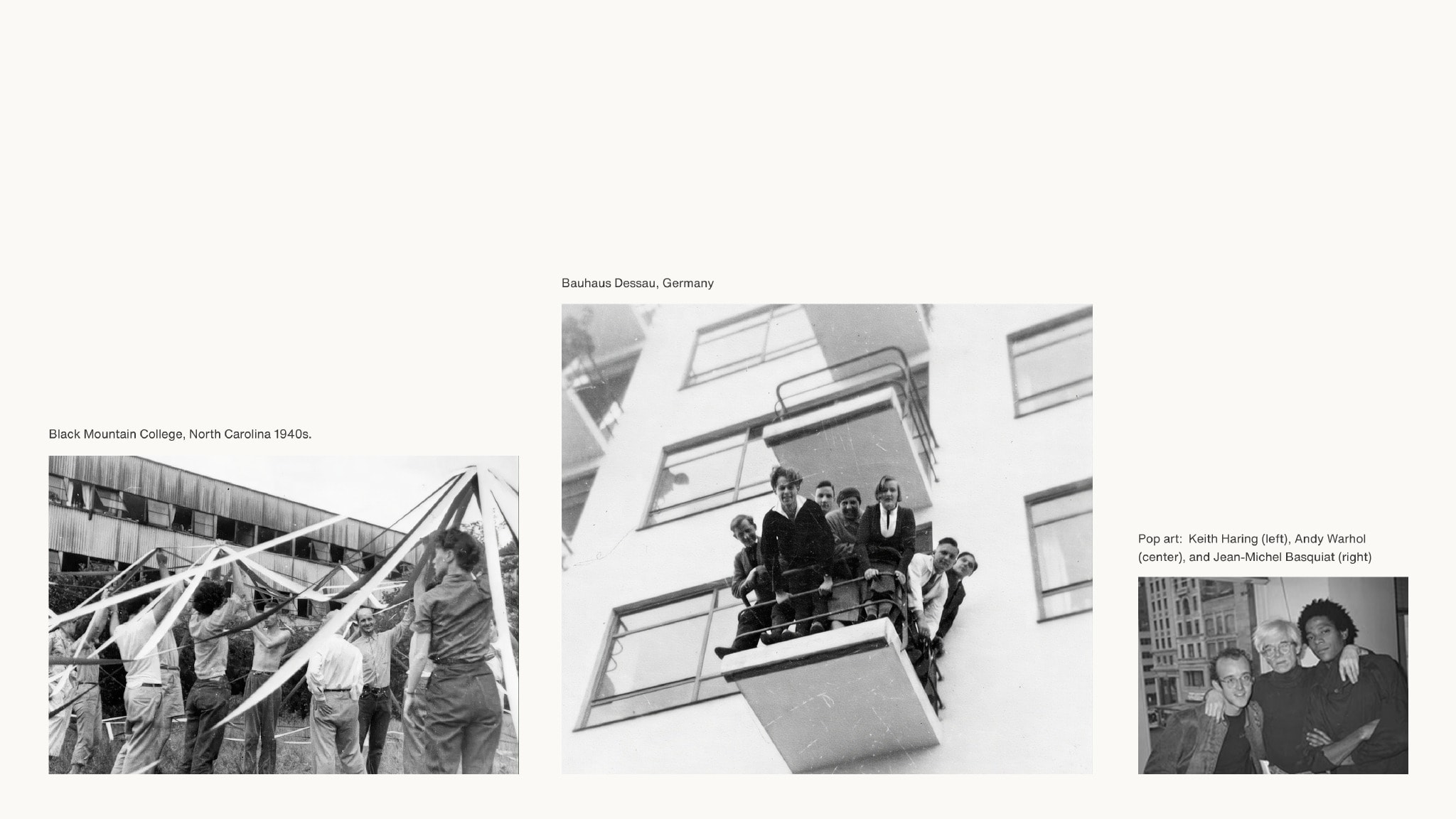
The first is individualism. We're surrounded by the idea of the lone genius, the builder working alone in a room, making something that will change the world. But change doesn't happen that way. It happens when people work together, when we're collectively organized. Think about any art movement: people together, proposing ideas, learning from each other. We can name a few central figures, but history often simplifies collective achievements into the stories of individuals.
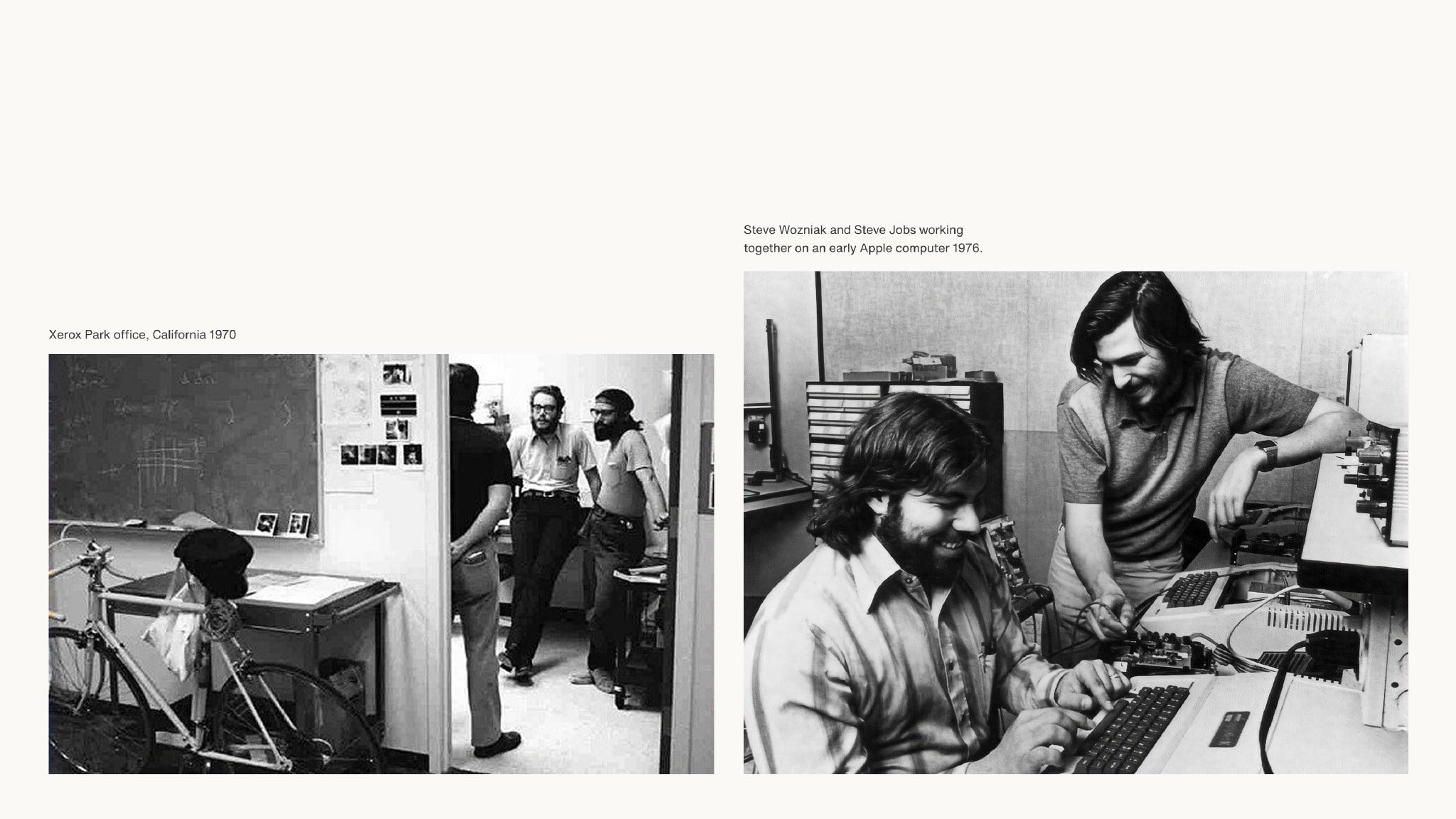
Even Apple started with two people. And that's without talking about everything around them: the energy and the culture around computers, Xerox PARC, San Francisco.
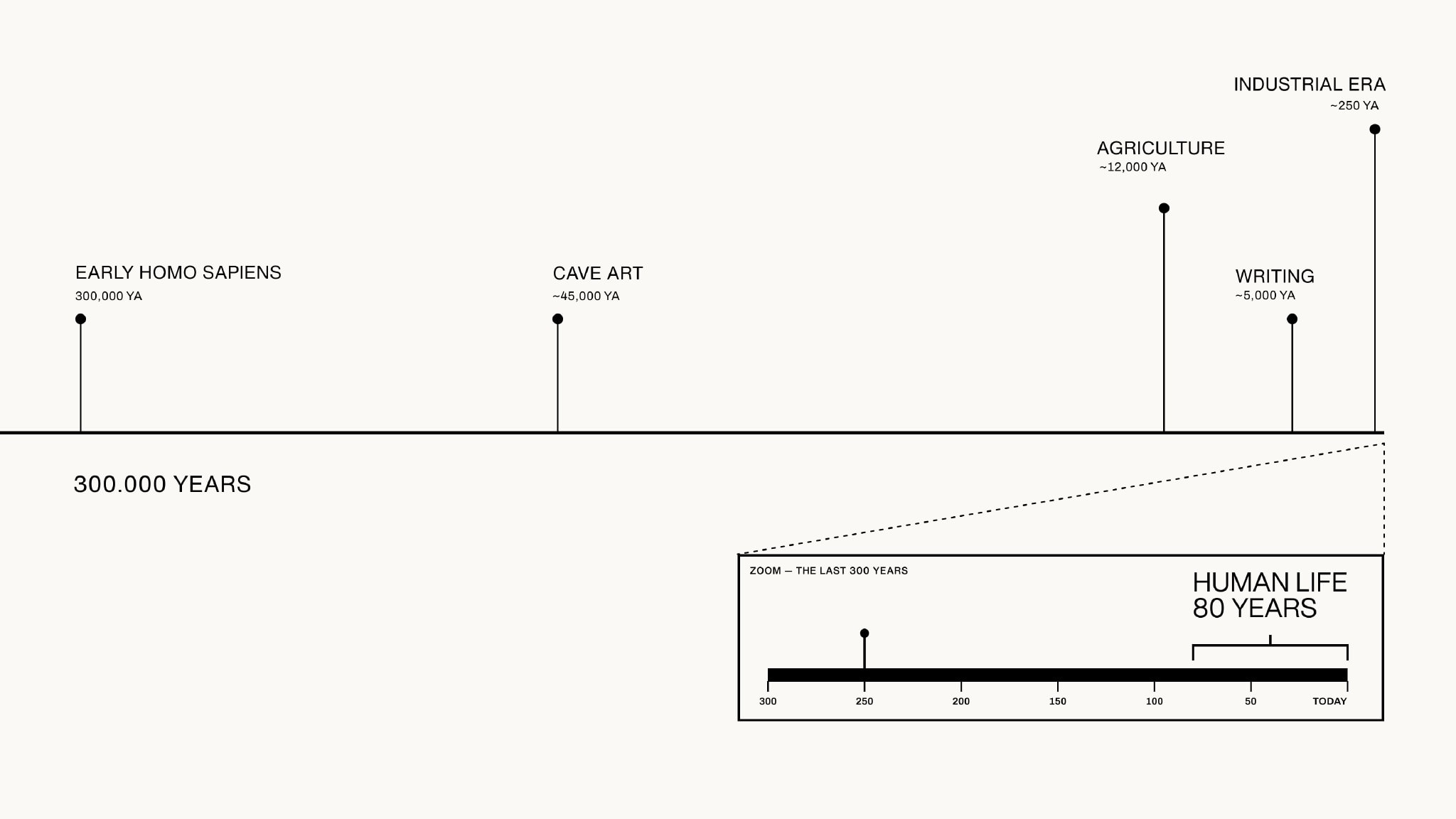
The second reason is that we have a hard time zooming out and looking at our work beyond our own lifetime. Human history is about 300,000 years long. A human life is around 80. Everything we do has an impact on the future, and everything people did in the past has an impact on us today.
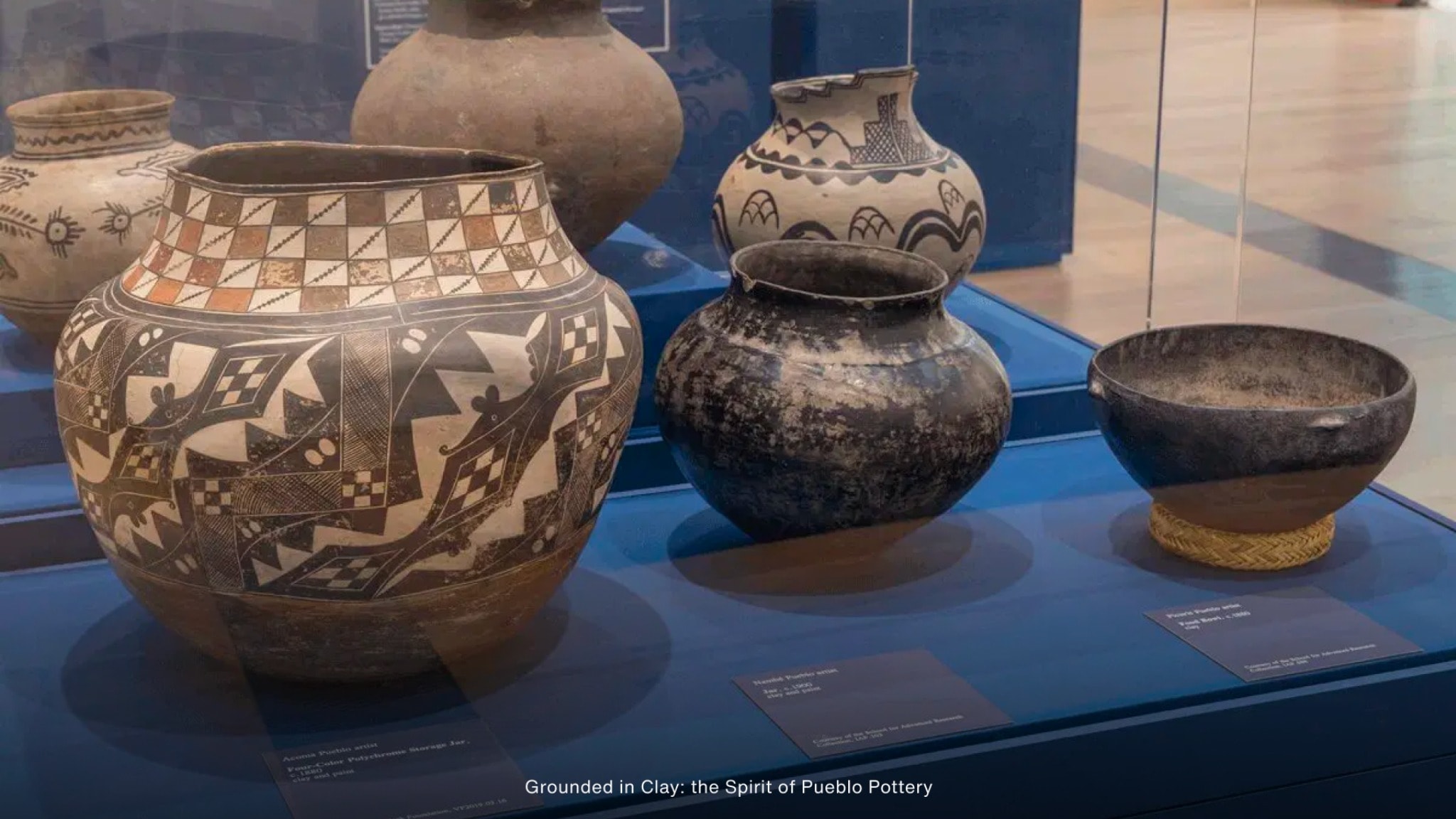
When I go to museums, I love looking at objects from the past: ceramics, tools, artifacts. If you pay attention, most of them don't have a name attached. Authorship is a very modern idea. And yet those objects speak to me. They show years and years of our species experimenting, crafting and collaborating, and all of that is part of us today.
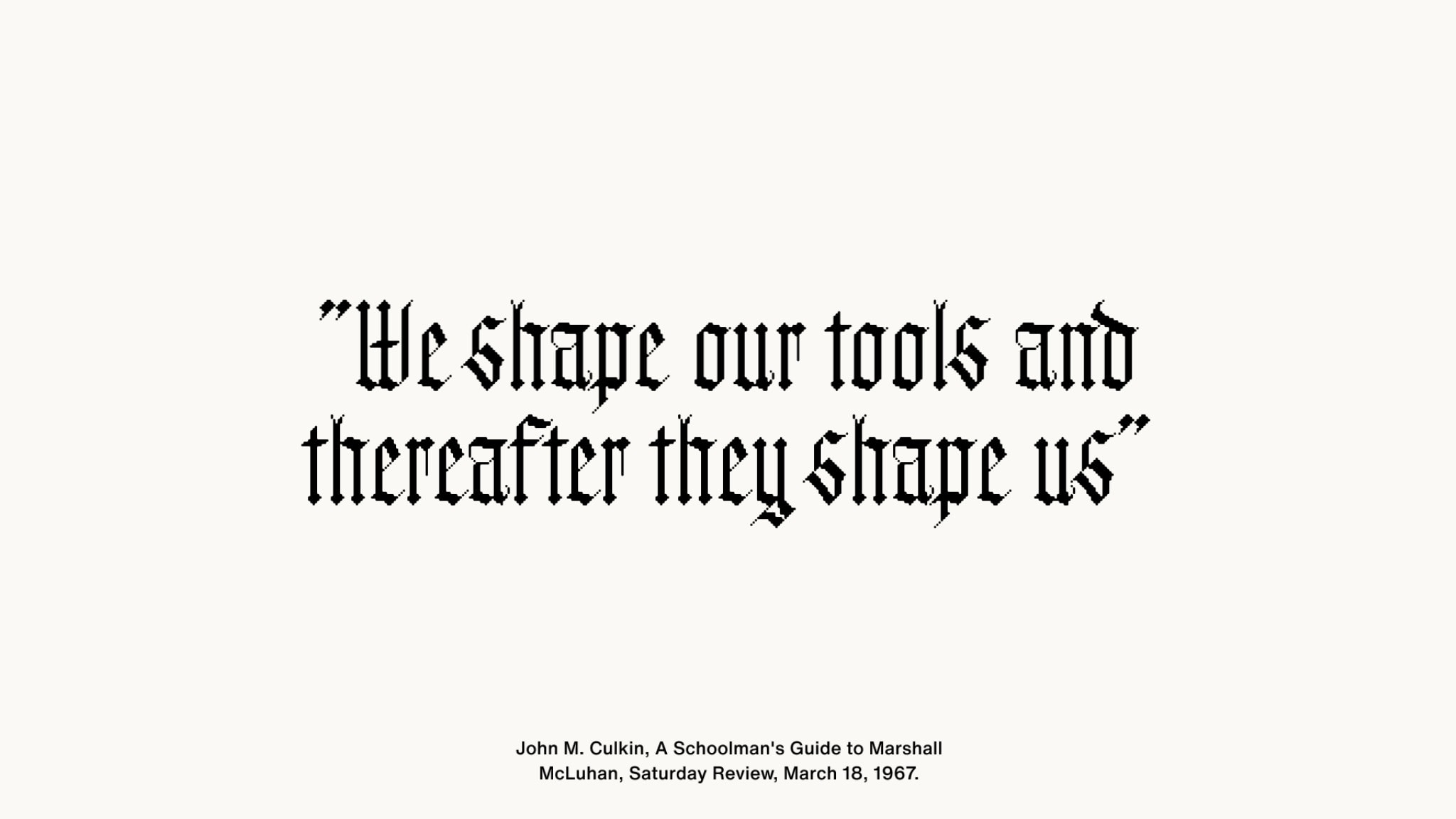
When I say we underestimate our power, I mean it quite literally. The tools we make also shape us.
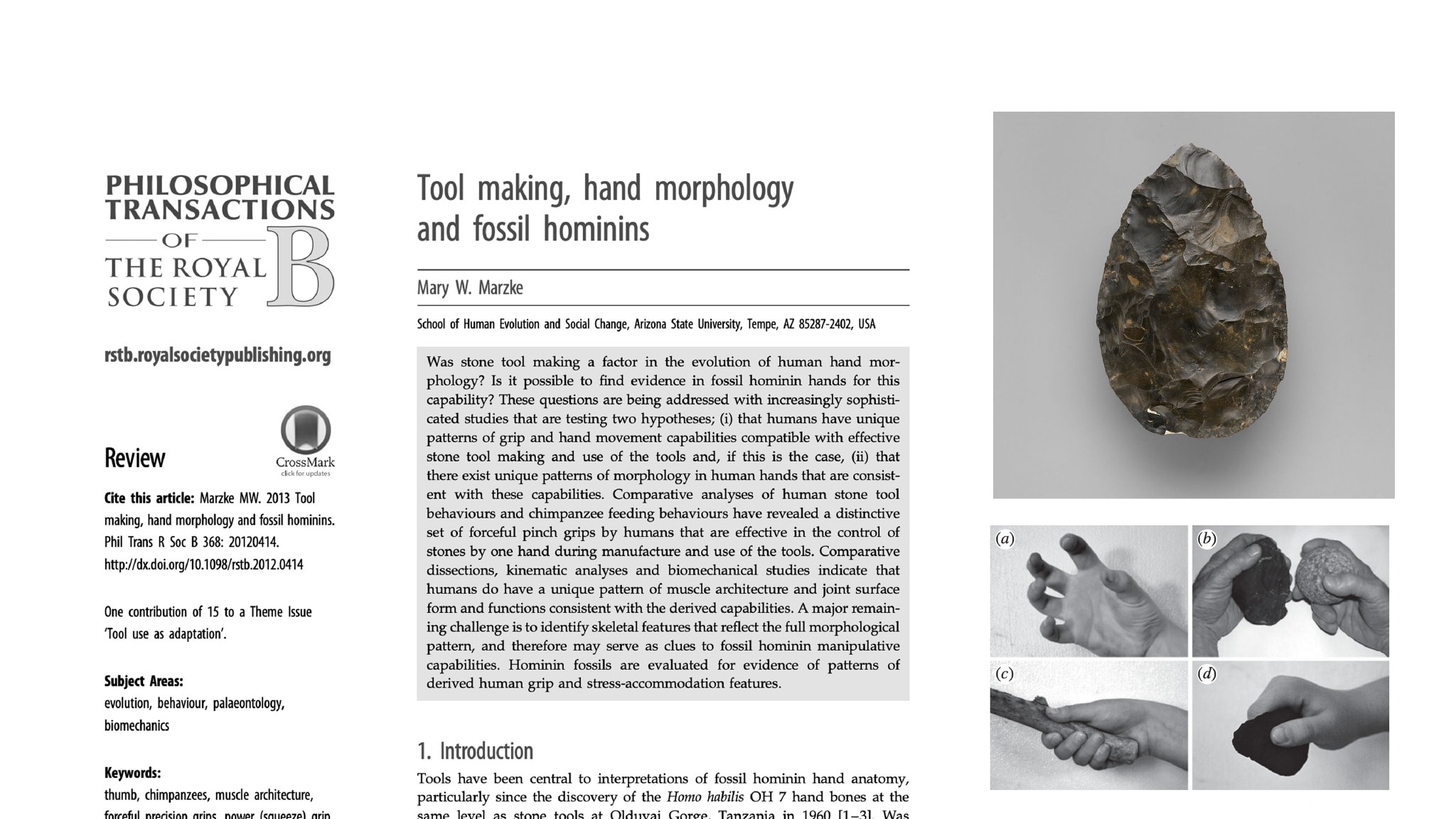
I was reading a book recently and found this research about the relationship between our hands and the stones early humans were carving. The exact relationship is complex, but the hand we have today has its shape, in part, because of the tools we made as a species.
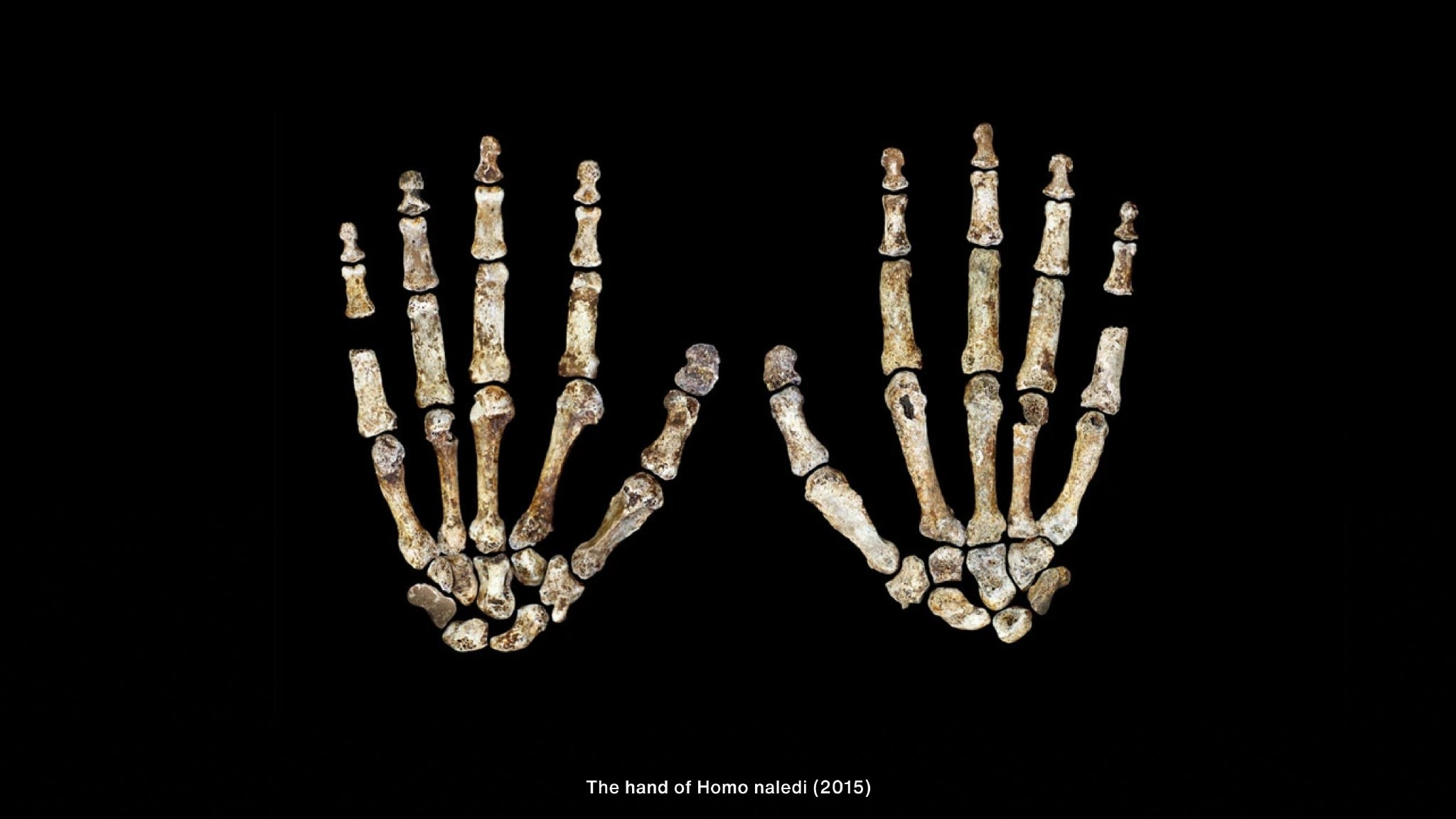
It's crazy to think that a bone can change. Of course, it took millions of years. But if a bone can adapt, think about the organ that evolved to be adaptable: the brain.
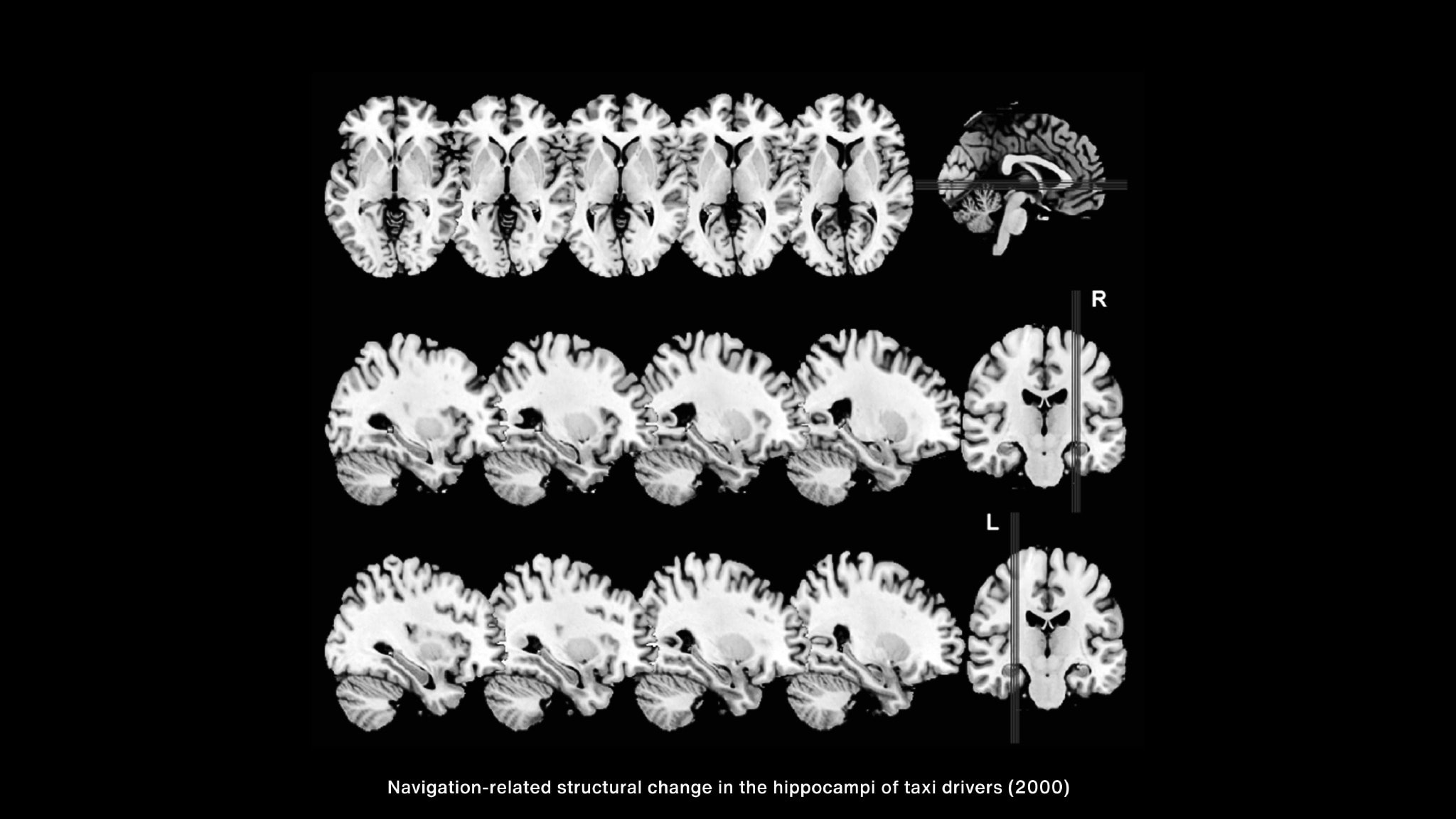
Our brains are plastic. If a bone needs millions of years, a brain needs a lifetime. London taxi drivers literally grow their hippocampus memorizing the city's streets. And the software we use every day shapes our habits and the way we think.
Every time I want to organize a trip, I go straight to a spreadsheet to organize my thinking. When I'm thinking about a design, I catch myself imagining my cursor clicking around, moving things inside the Figma interface. The tools I use every day are embedded in my thinking.
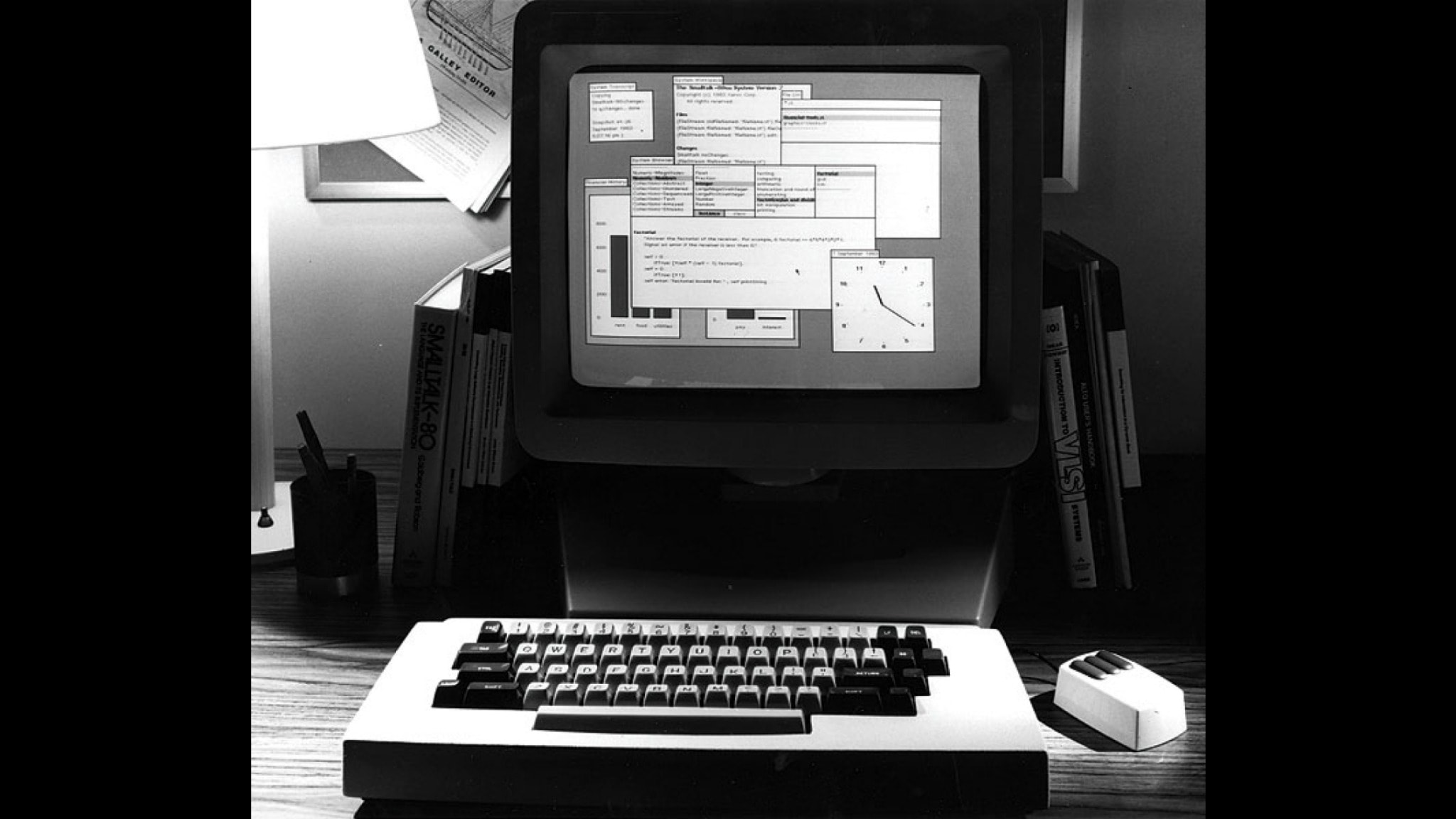
That's the symbiosis between humans and computers that computer history talks so much about. And that's the extraordinary power we have as builders.
We don't just make things people use. We make things that shape how people think and act. And now that power is spreading. Software creation isn't concentrated in the hands of a few people anymore. More people know how to make software, or can collaborate on making it.
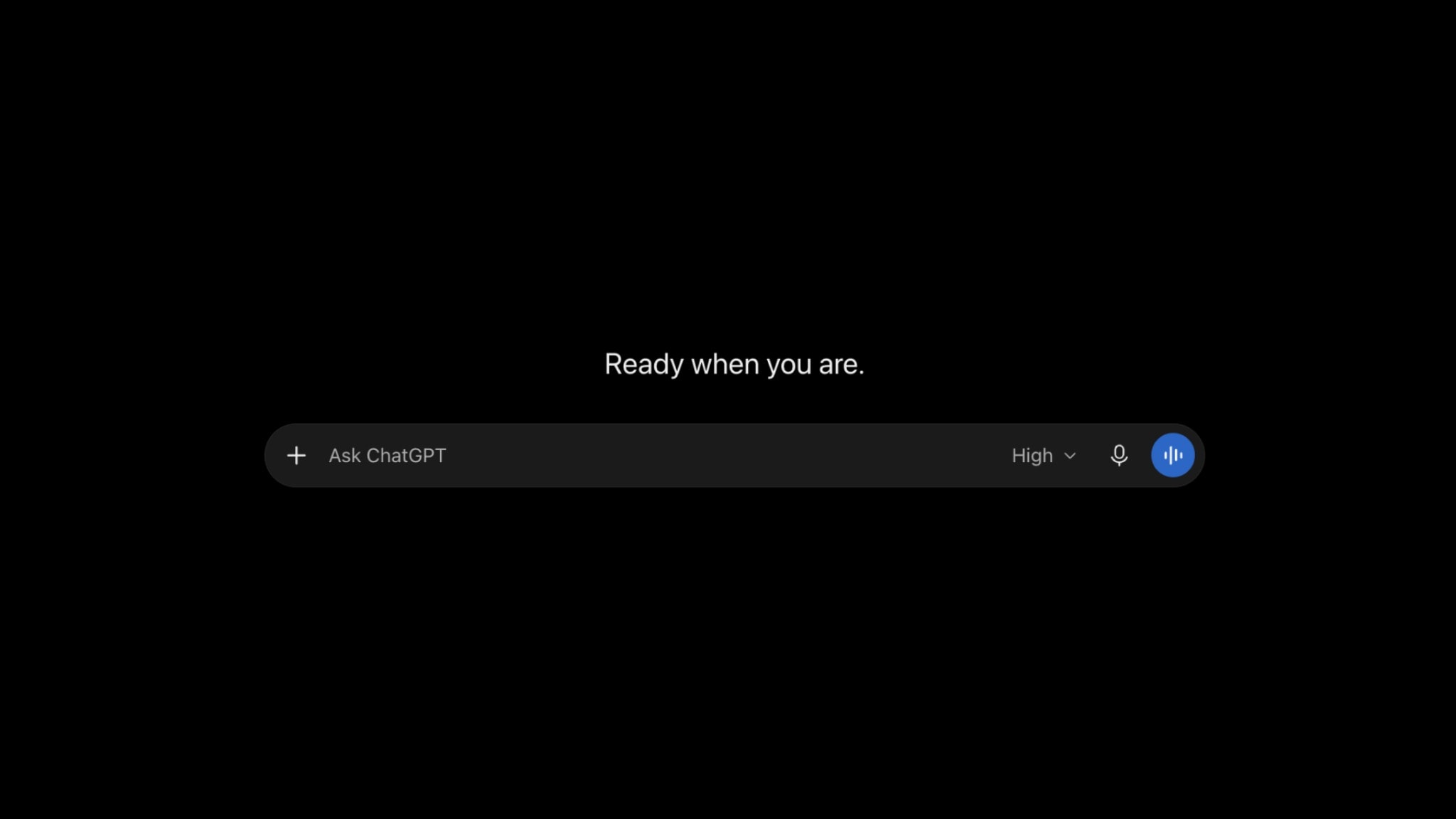
That's why it's not silly to keep talking about chat interfaces, even if you're already tired of hearing about them. These choices matter. The same way the internet shaped how we consume information, and shaped our attention span, the AI interface is going to shape how we think and how we create.
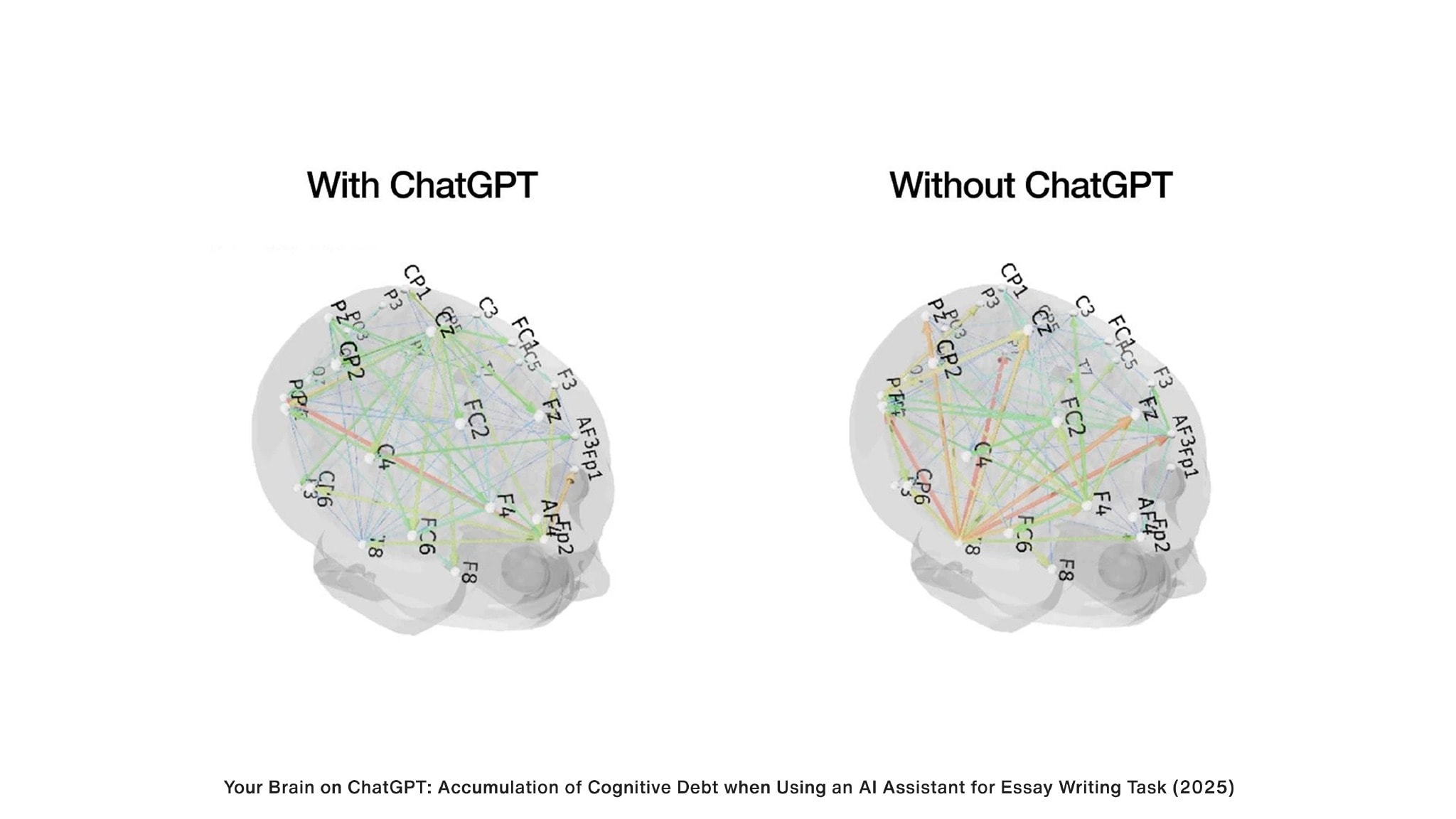
And it's already happening. Your Brain on ChatGPT measured how much less connected the brain is when people write essays with an AI assistant. The AI interface isn't designed yet. We're discussing it, testing it and experimenting with it right now. We're all part of designing it.
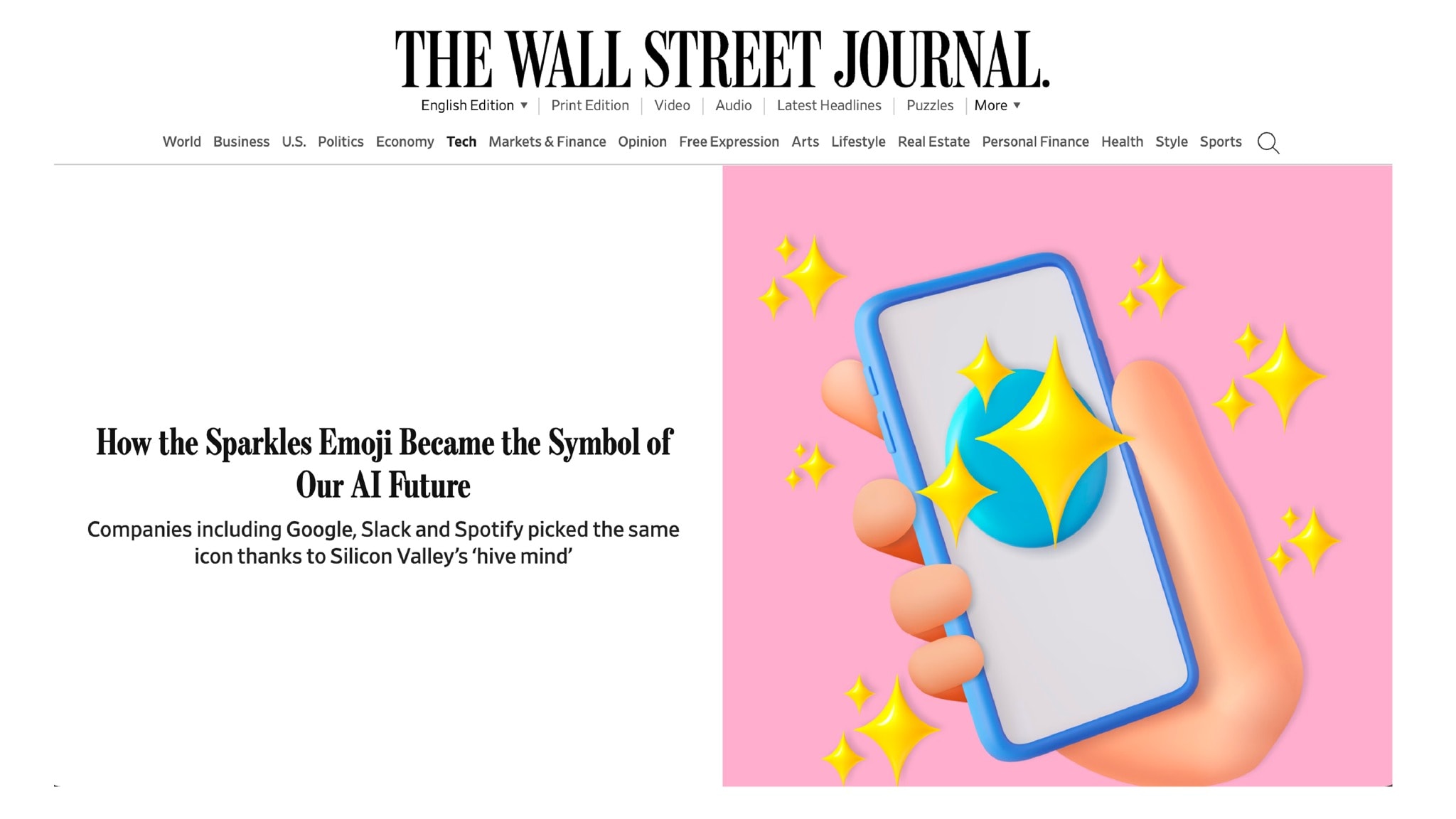
When you walk around San Francisco, or take the subway in New York, you see the sparkle icon everywhere as the symbol of AI. It's crazy to me, because we just forwarded that icon. Nobody stopped to ask if it was the right one. I know it's a hard problem, but as builders we saw it, started reproducing it, and kept going. A lot of you probably already put a sparkle in an interface. I did too.
Everything is moving so fast that I want to invite you to think about the future: what do we want from it, and what does software mean to you? I don't want corporations or influencers to be the ones deciding what the AI interface should be. They will always remove the soul of it.
We've spent thousands of years shaping our tools, and our tools have shaped us in return. Now we're in another moment of transformation. So instead of only asking what AI will be capable of, I want to ask a different question: what kind of tools do we want to build? I have three ideas, three kinds of tools I hope to see more of.
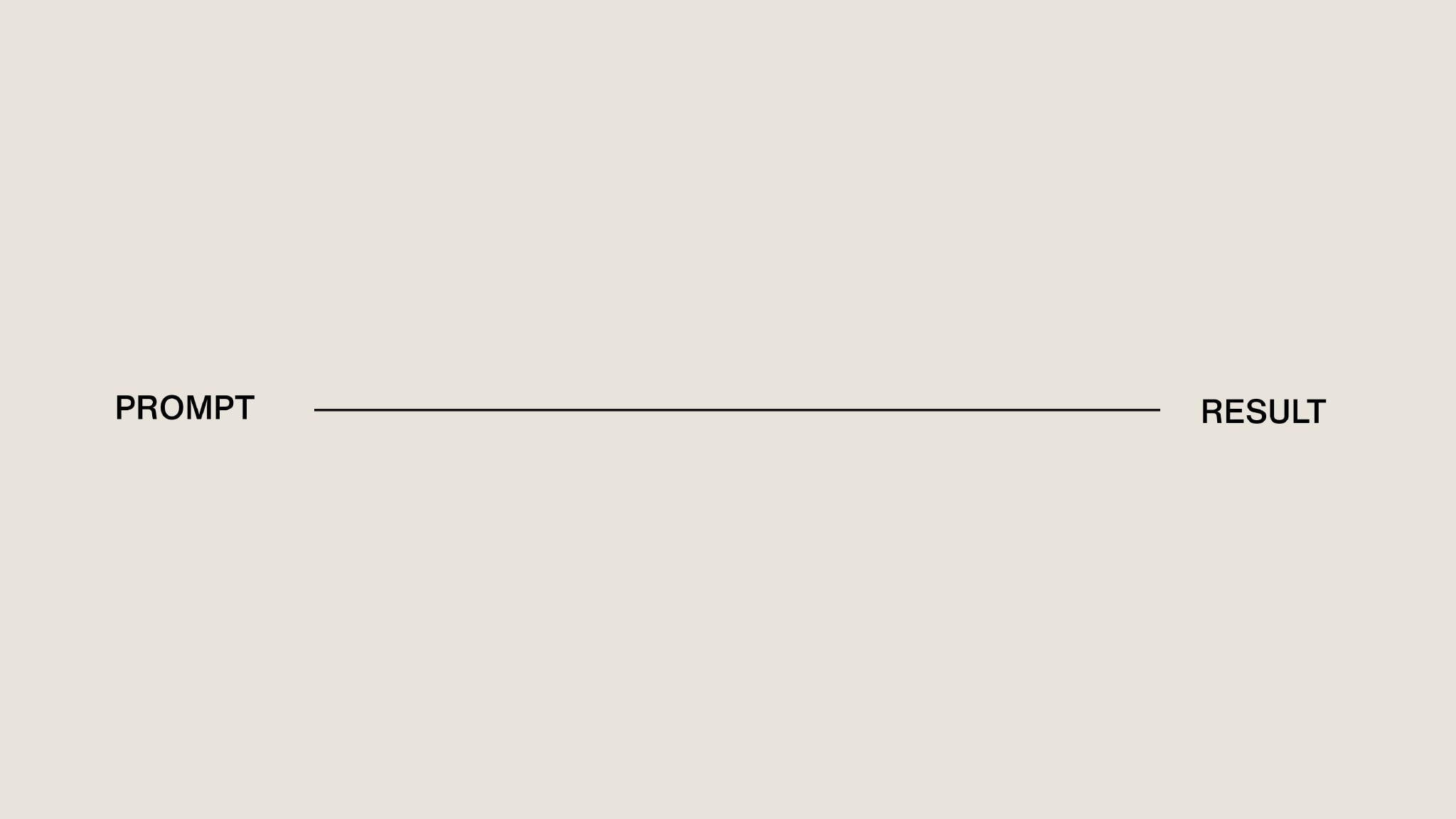
We talk a lot about automation, software factories and agents running 24 hours a day. It's always about one prompt and suddenly the product is ready. But when you prompt and get a result, so much is lost in between. You prompt again, you see the result again. You're just reacting. The solution is already there, and all you can do is say yes or no.
During a real process we take detours. We learn new things, try different paths, experiment with things that end up shaping the final result. As a designer, this phase matters a lot to me, because I don't know where I'm going to land. The most common advice I give to any designer is the same: go generate alternatives. When a tool lets you put your hands in the clay, you also transform yourself along the way. And it's more fun.
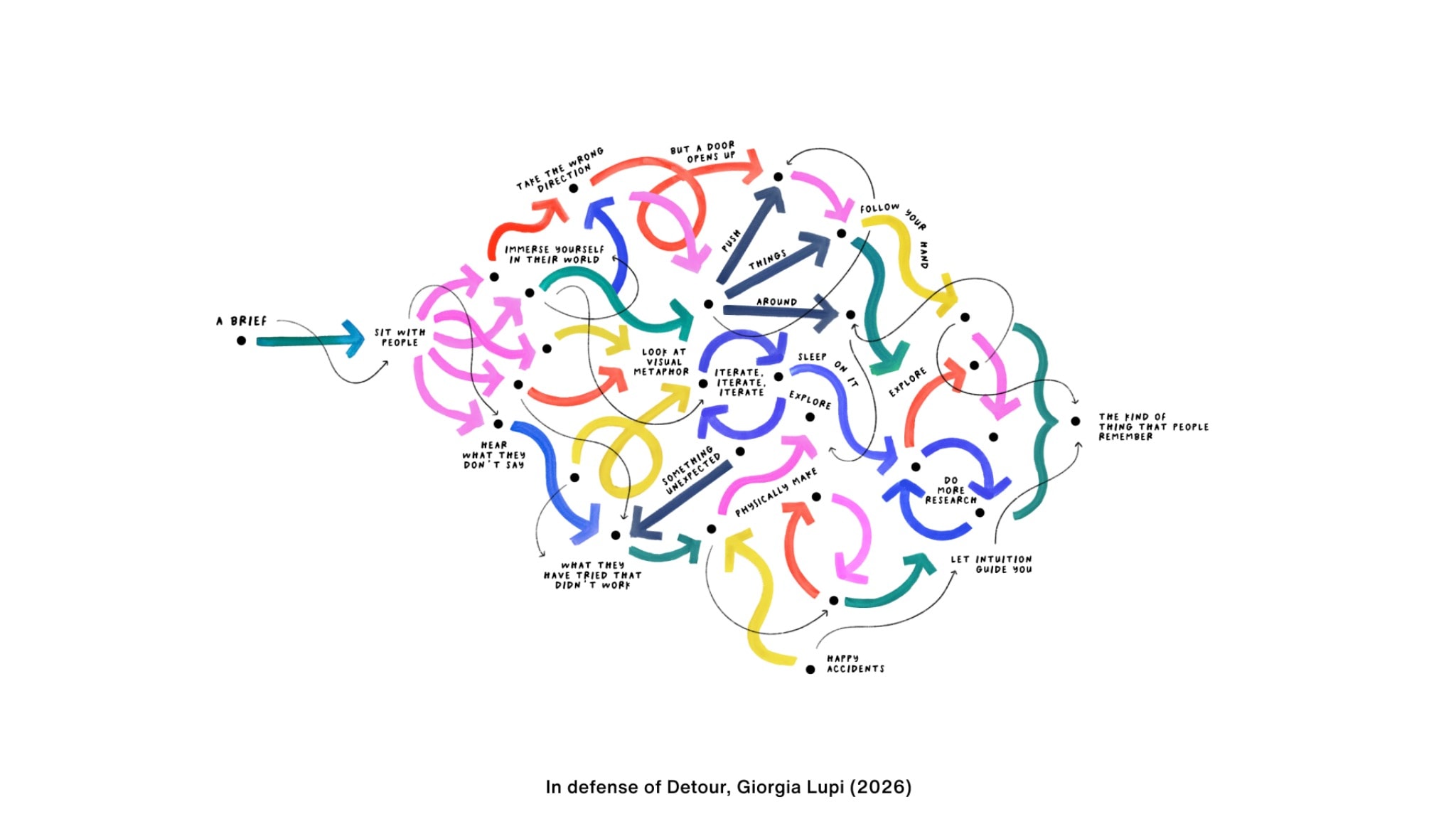
Giorgia Lupi wrote and illustrated a beautiful piece in The New York Times about this, about how some of the most interesting discoveries happen when we get lost in the creative process. And beyond the result: when you start a project and finish it, you're a different person. You learned, you experimented, you got better at the job. When we jump straight to the result, that doesn't happen.
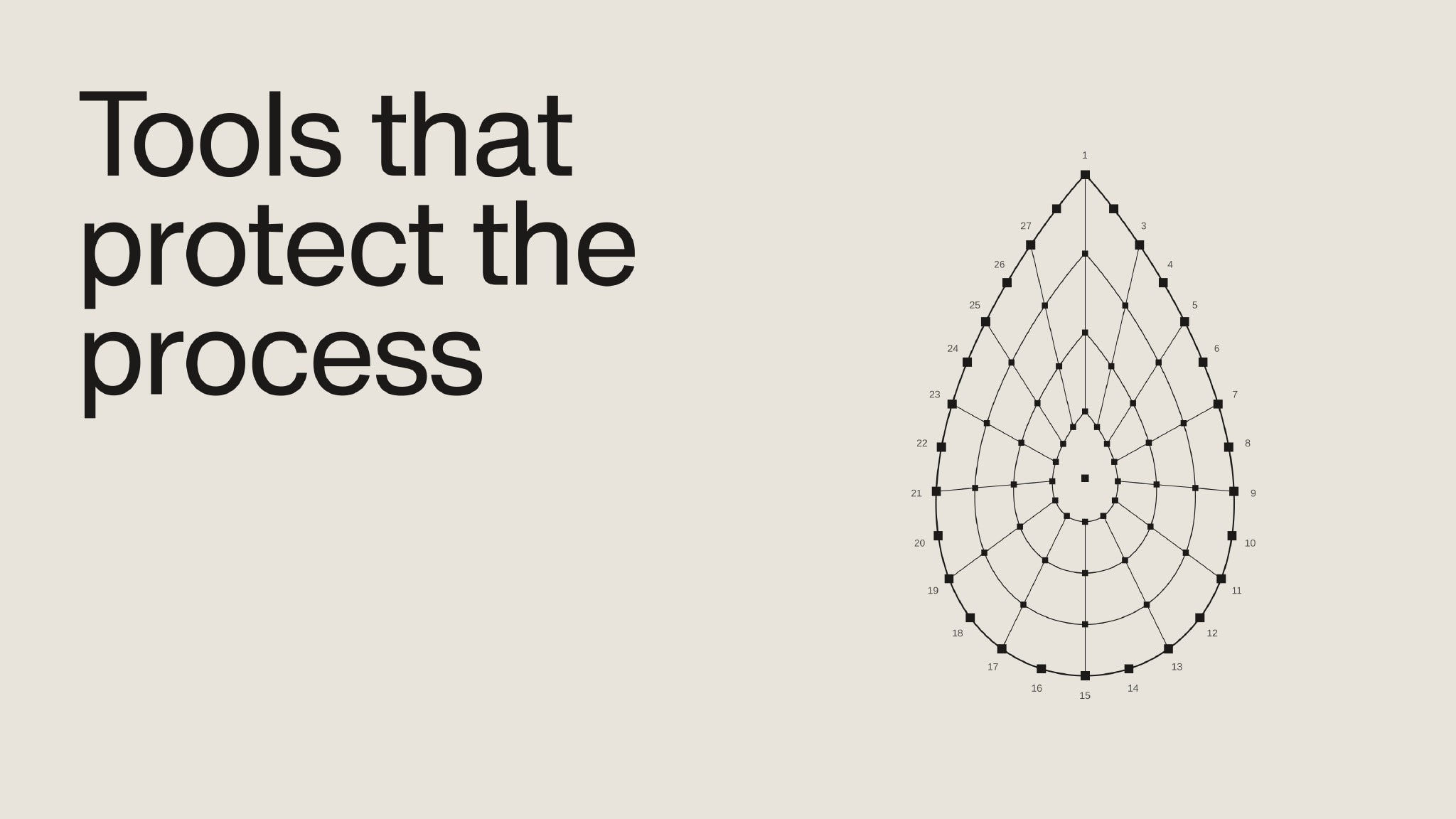
I want tools that help me go deeper into the process, that guide me through it, not tools that skip to the result.
This isn't only about AI. For the past 10 years, I haven't started design projects by looking at benchmarks. Nothing against benchmarks, I'll probably look at them later, or someone on the team will. But a benchmark is a solution that already exists. At the beginning of a project I want to train the part of my brain that translates a question into an interface, from first principles. That's the part I don't want to skip.
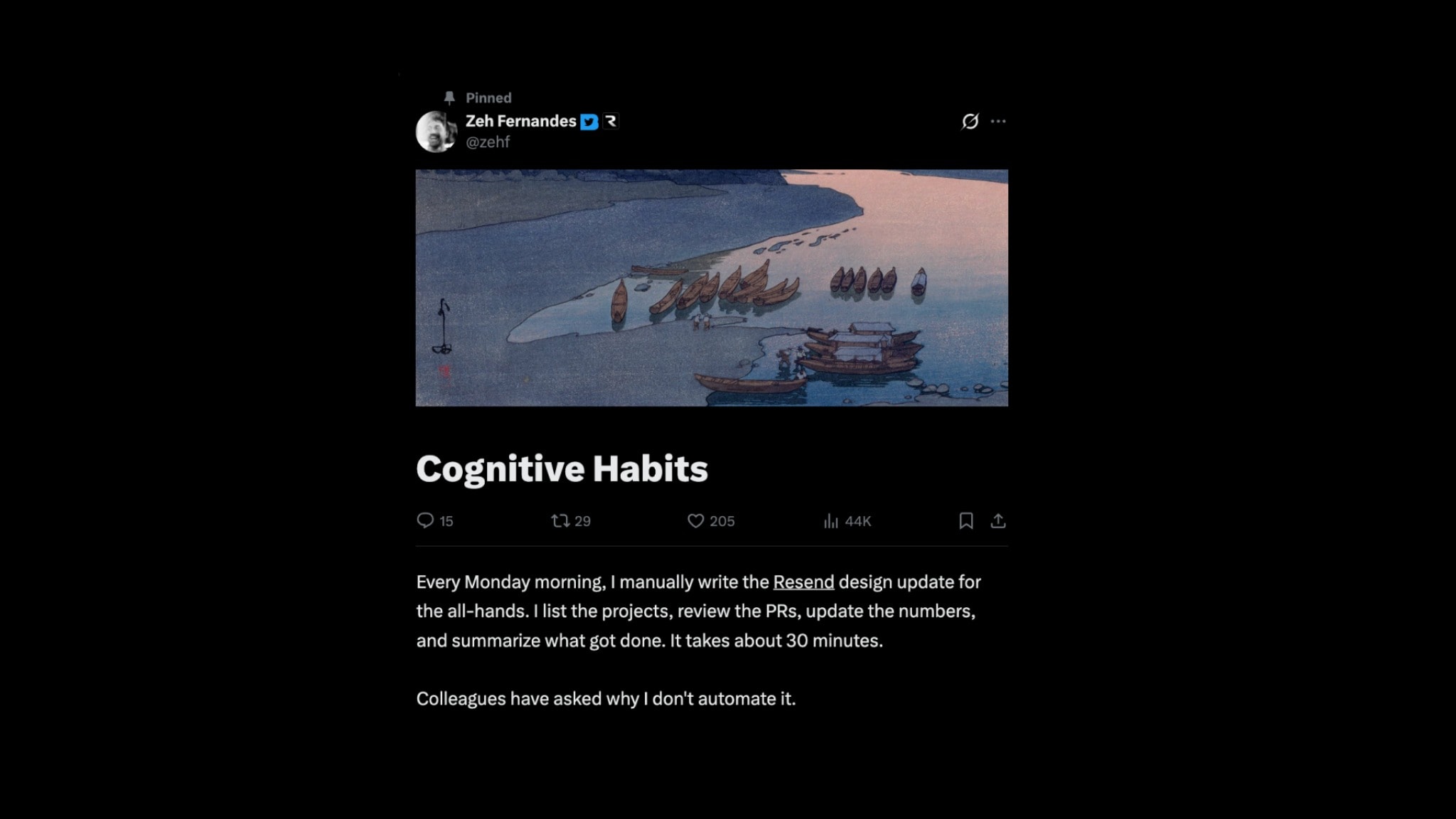
I wrote about this recently in a piece called Cognitive Habits. When we were hunters and nomads, we walked a lot. Our bodies need movement. In modern society, physical effort is optional, so we invented gyms. We're delegating so much to AI that we'll probably need a gym for the mind too: deliberate spaces where we keep practicing the abilities we don't want to lose.
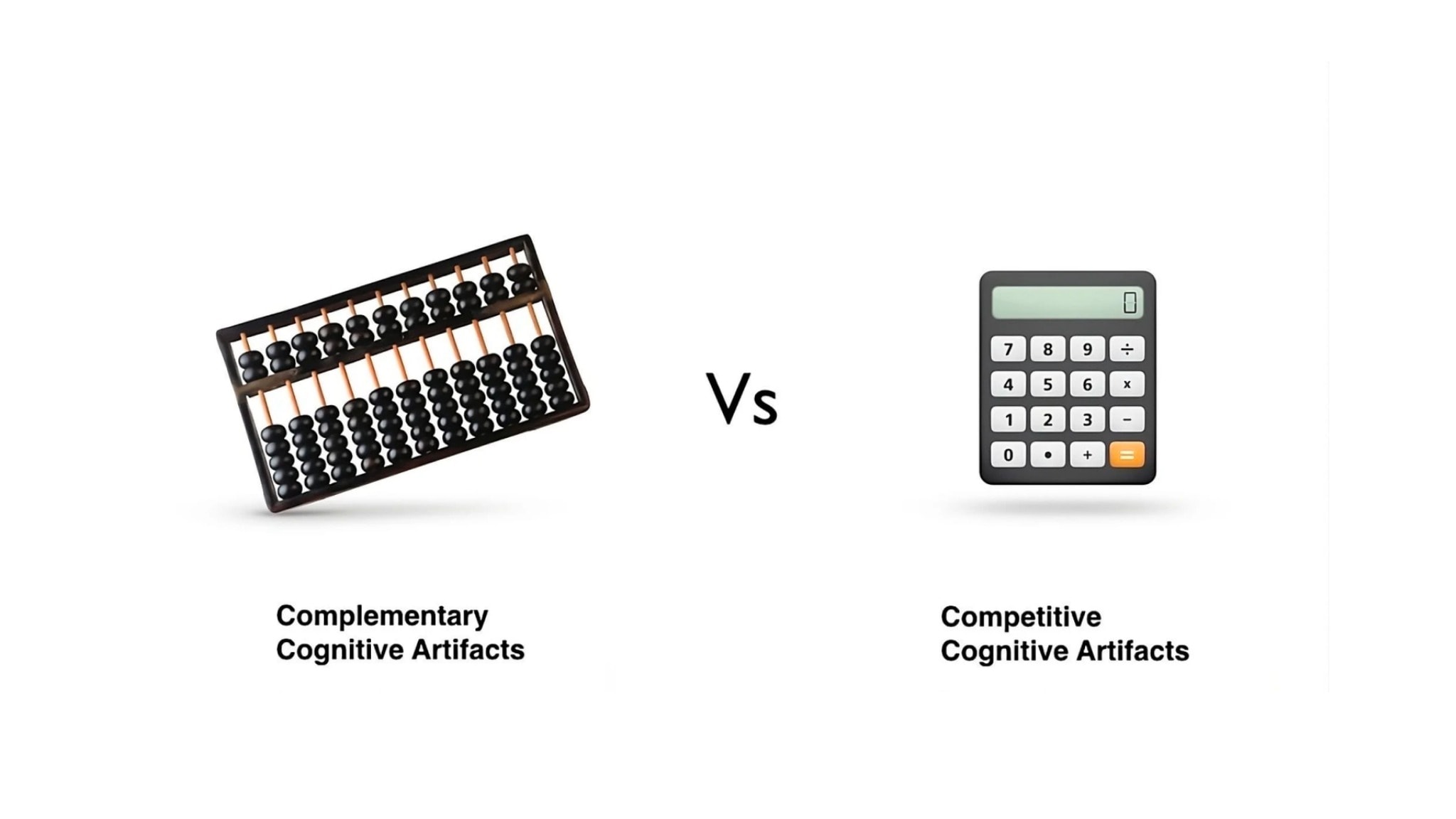
This isn't an argument against automation. Some things are absolutely worth automating, and we should experiment. I love the framing of complementary and competitive cognitive artifacts, because it asks a good question: is this interface replacing me, or augmenting me? Both can be good. It depends on our intentions. What parts of the work do we still want to do ourselves? What do we want to keep practicing? We need to understand our own processes and be intentional about what we delegate and what we protect.
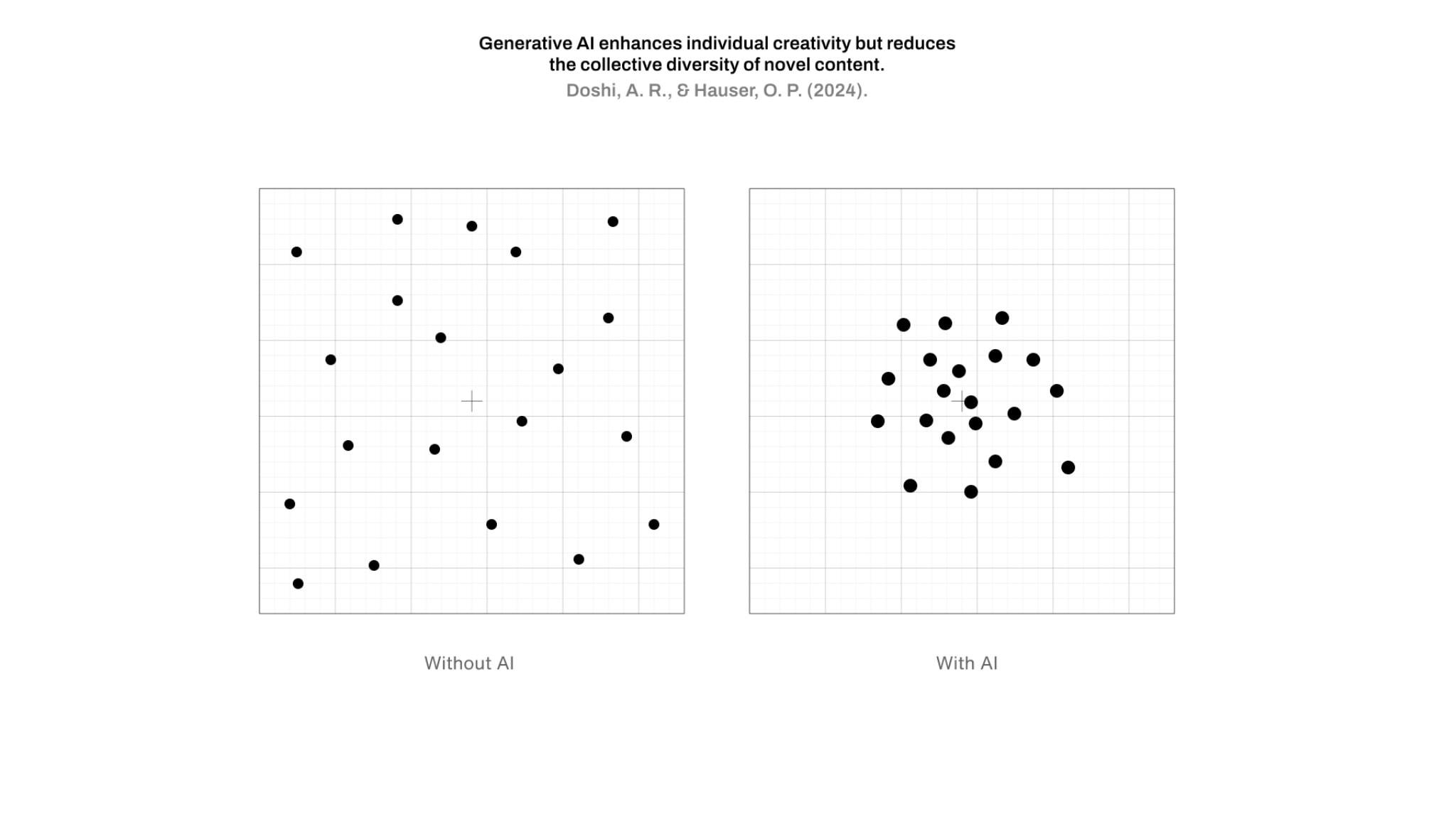
This research is interesting too. AI can make us more creative as individuals, but as a collective, as a species, we lose some of that creativity. The ideas get closer to each other. You can see it already: the same purple gradients, the same landing page structure, everywhere.
What if the best tools aren't the ones that take us straight to the answer, but the ones that help us discover something along the way?
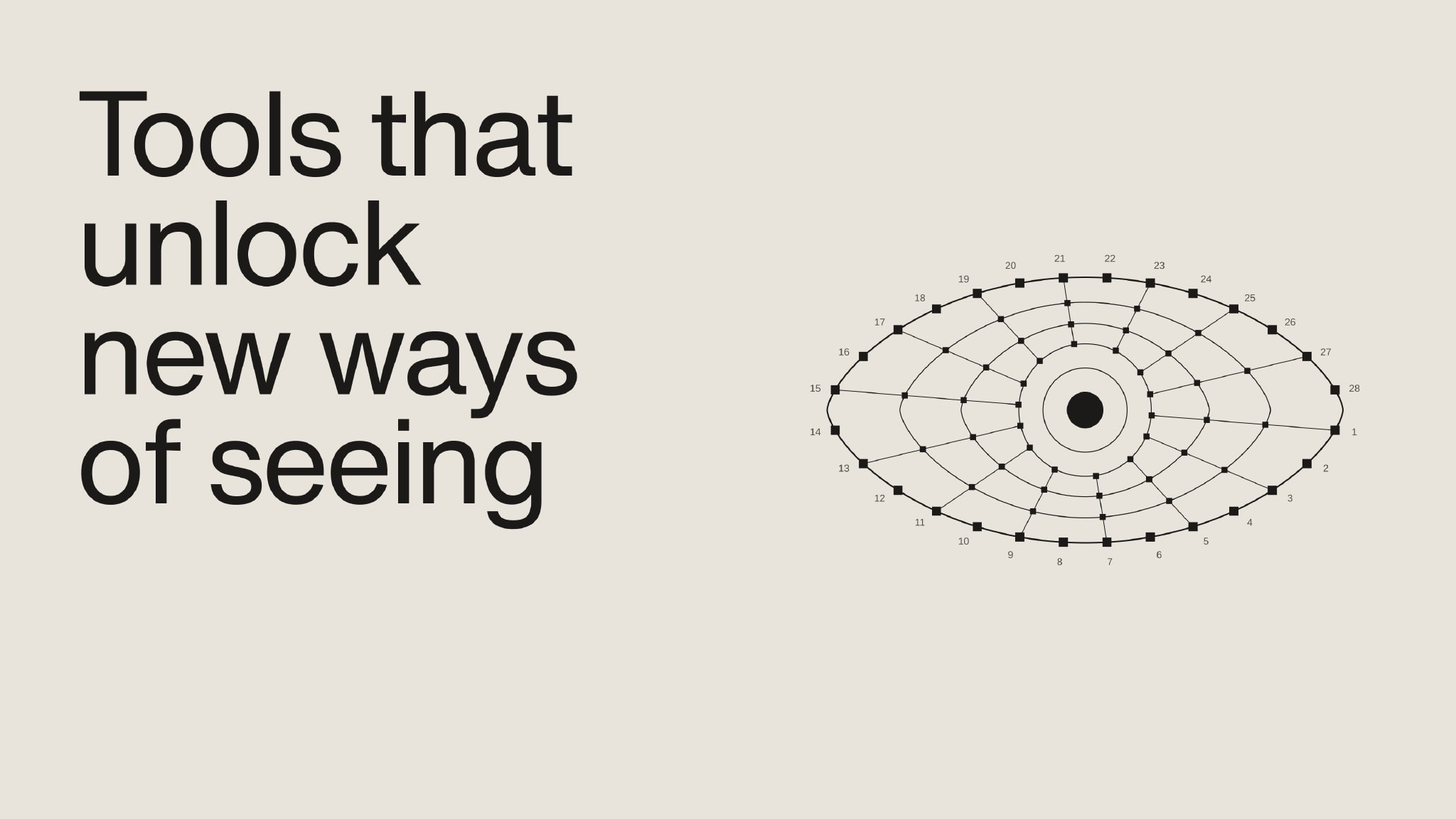
Talking about experimentation and creativity, the second kind of tool I want to see is one that opens new ways of seeing. Bret Victor has this idea that computation encourages powerful ways of thinking, and I couldn't agree more. Computers are an extraordinary medium and we're still scratching the surface. We can take information, transform it, simulate it at a completely different scale. When we look at the same thing with different eyes, new connections show up.
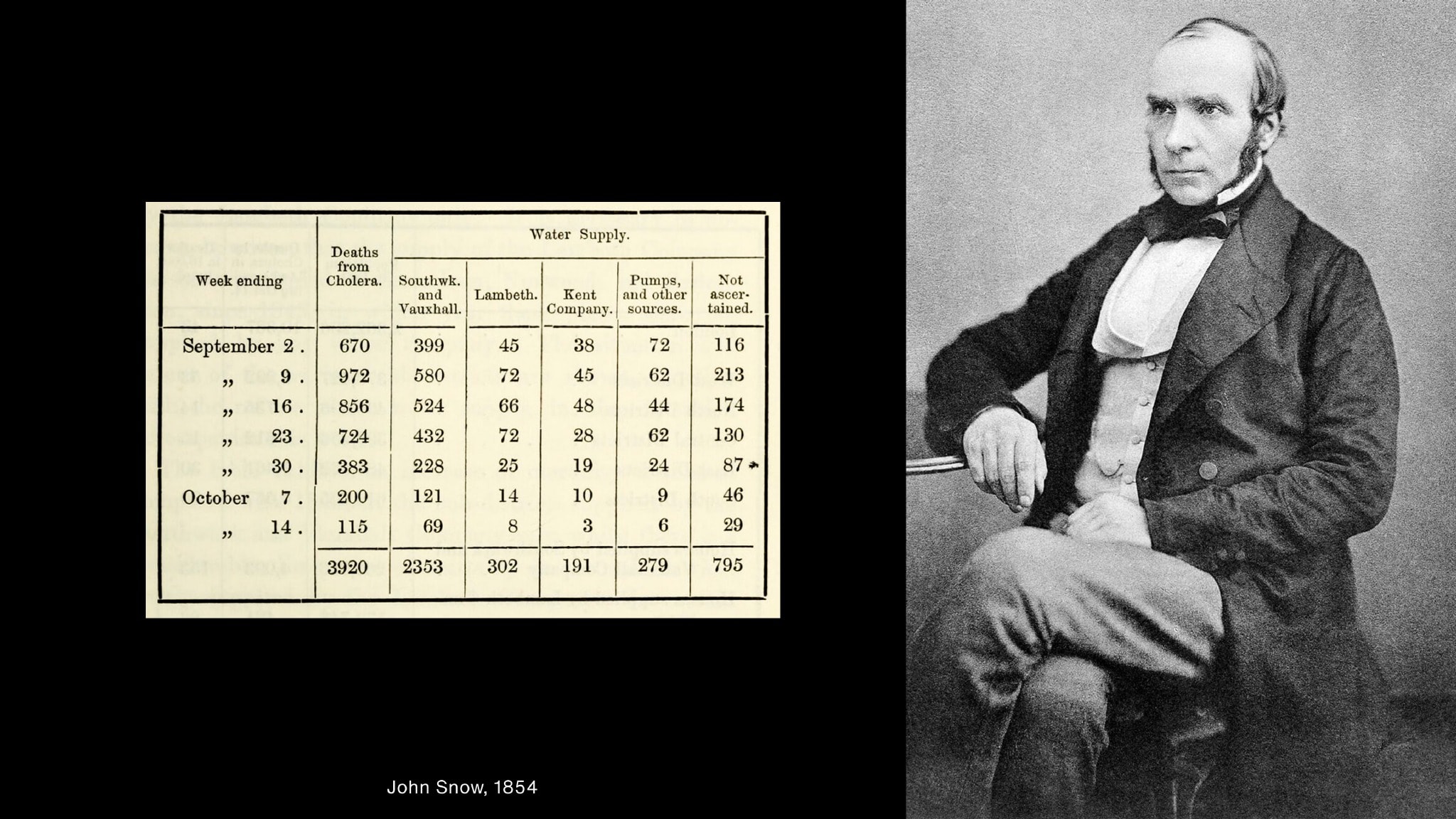
There's a story that has always moved me. It's about John Snow, not the one from Game of Thrones. He was a doctor in London in the 19th century, trying to find the cause of a cholera epidemic. He wrote down every occurrence of the disease, and still couldn't find why. At the time, people believed disease spread through bad air.
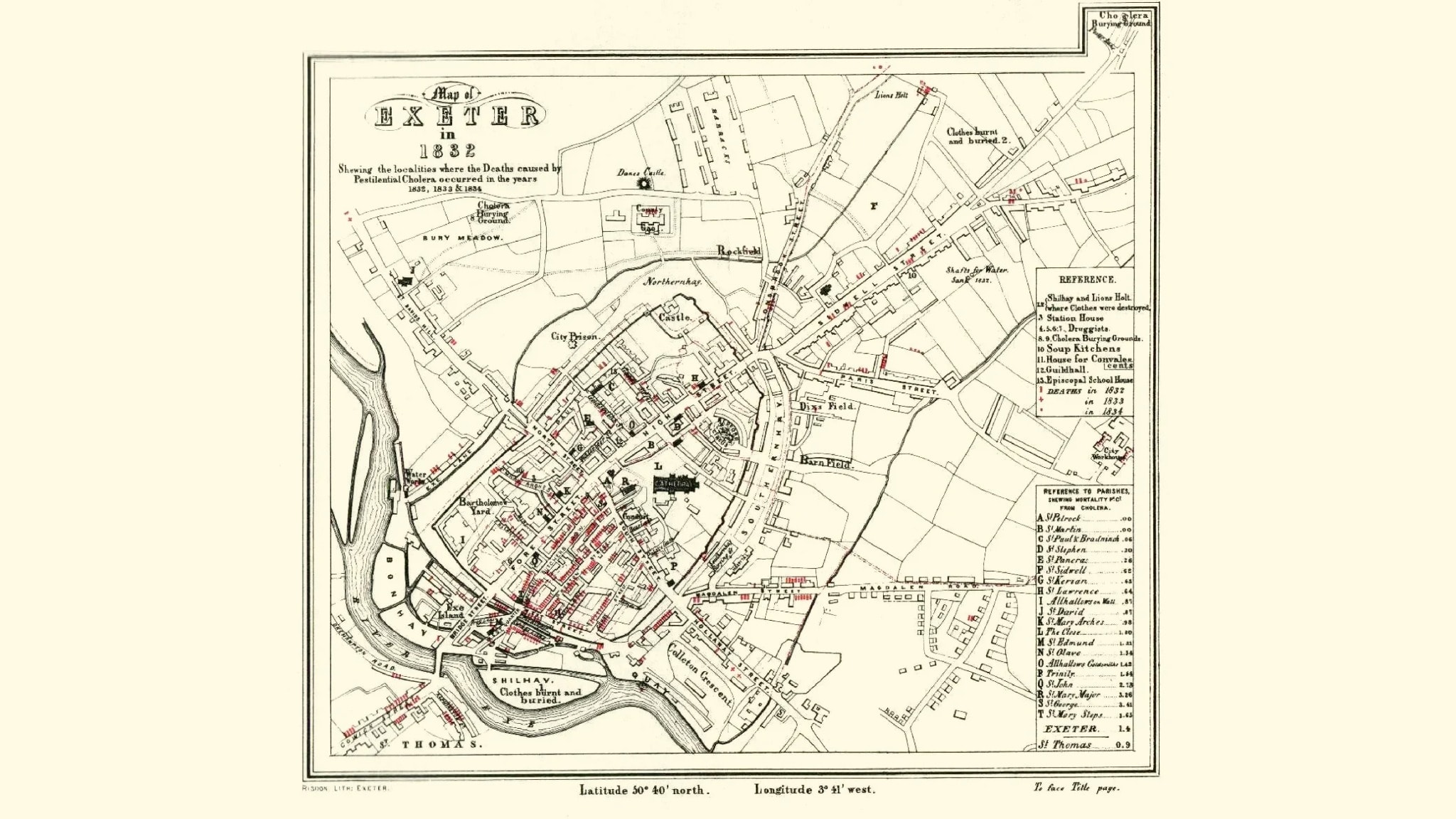
Then he took all that data and plotted it on a map. And the pattern appeared: the cases were clustered around a water pump. What I love about this story is that changing the way he looked at the information changed what he was able to understand.
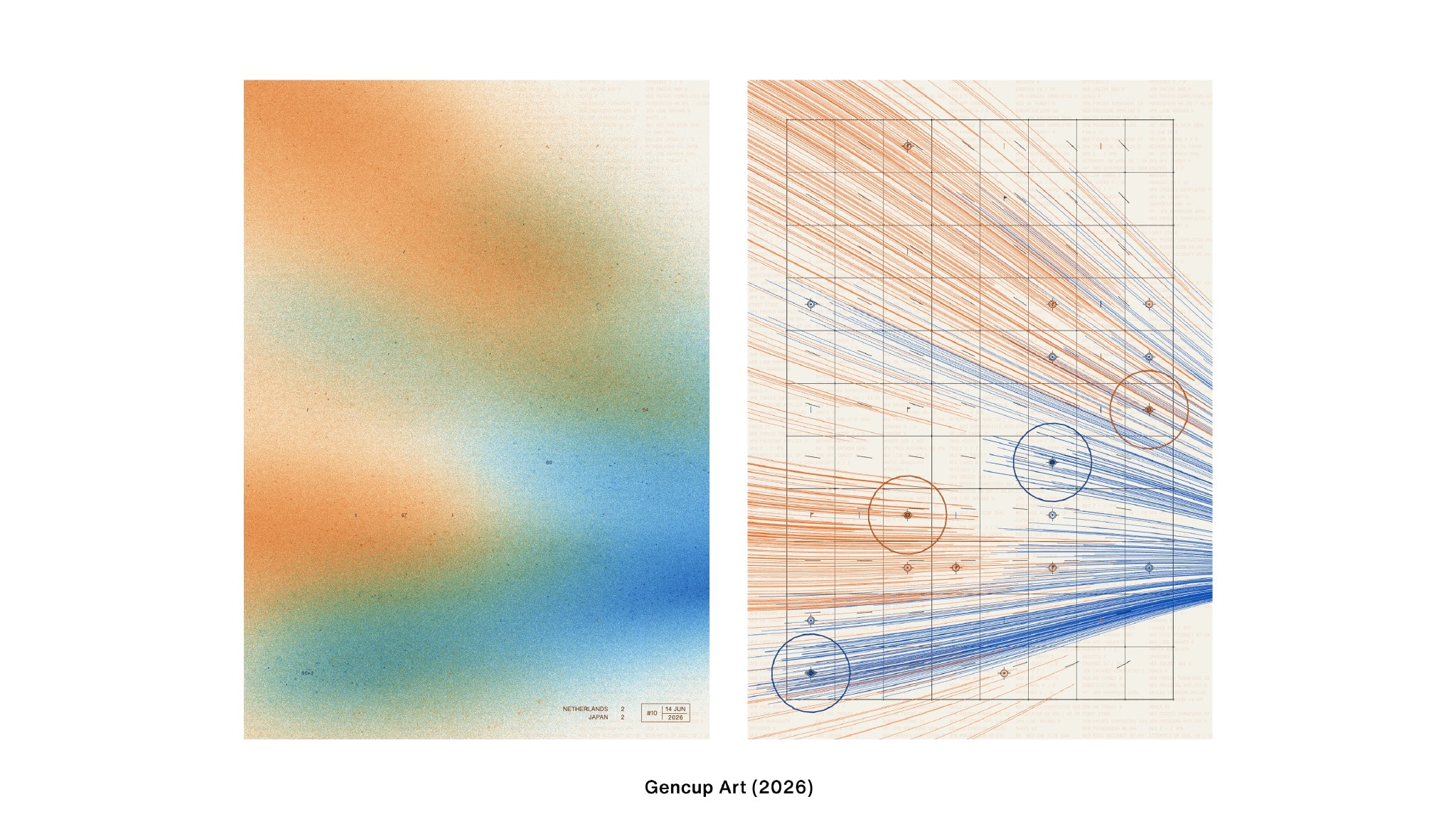
I have a much more playful project about this, and I'm definitely not saving lives with it. It's called GenCup. Since 2018, I take the data from World Cup matches and turn it into generative posters. I love football, and I wanted to connect something with such strong cultural meaning to my background in graphic design.
The goal was never to make an infographic. It's more about cultural meaning and data perception: playing with information, emotion and visual form. Every four years I come back and try a new way to see the same data. And I always find something new. It never really ends.
I think we need more of that spirit in software, especially now with AI. We've been talking a lot about chat interfaces, and it's an important discussion. But I hope we don't limit our imagination to the things we already know. Computation has always been about extending our human capabilities, helping us see and understand things we couldn't before. How can we design interfaces that open new ways of seeing? How do we get out of the prison of select boxes, combo boxes and tables? We can do so much more than that.
When someone says there's no alternative, the conversation ends. We stop experimenting. I don't think we should accept that. Not for the economic and political systems we live in, and definitely not for the tools we build.
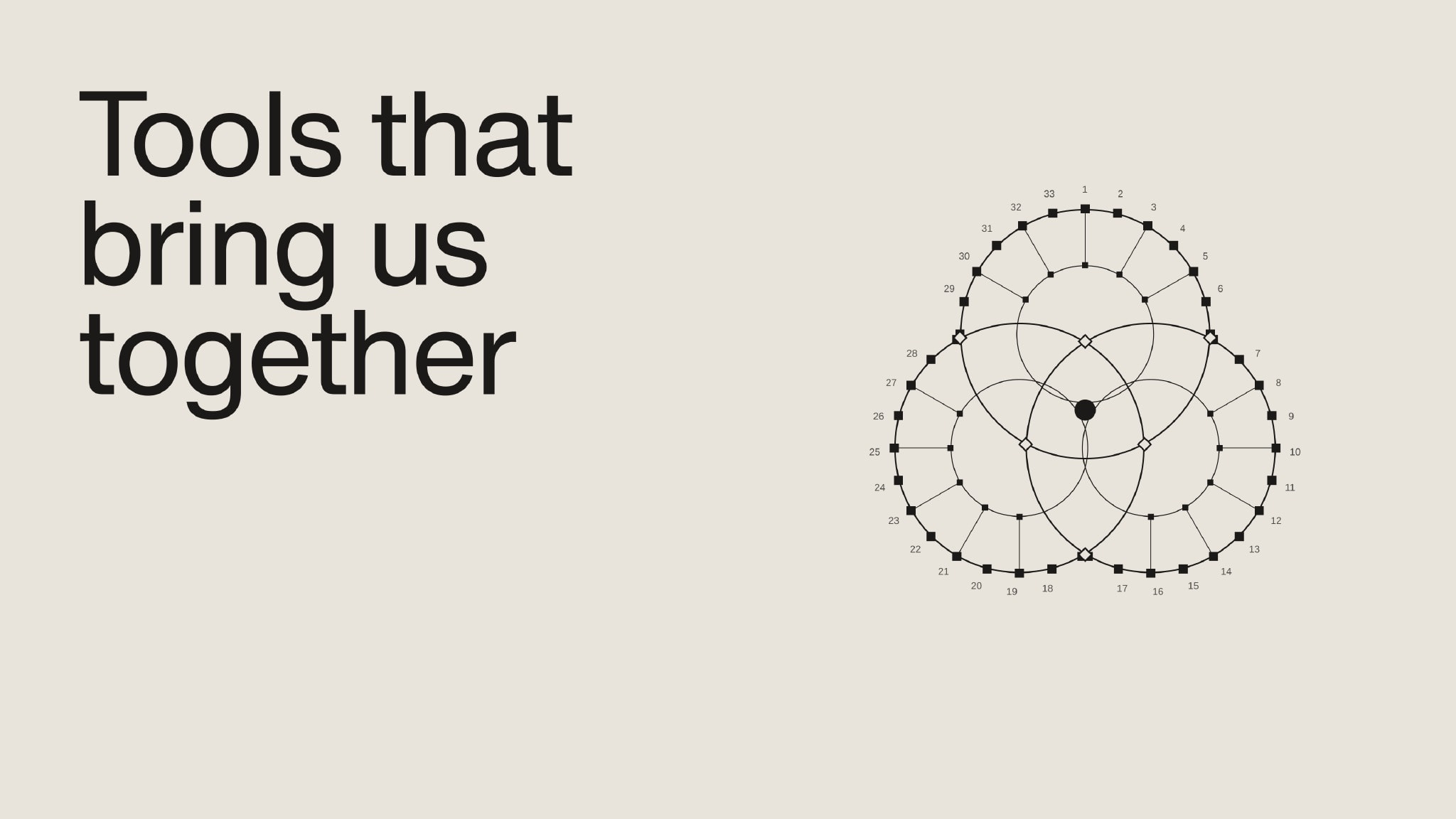
Back to the beginning of this talk: we're not alone. We are always building on top of what came before us.
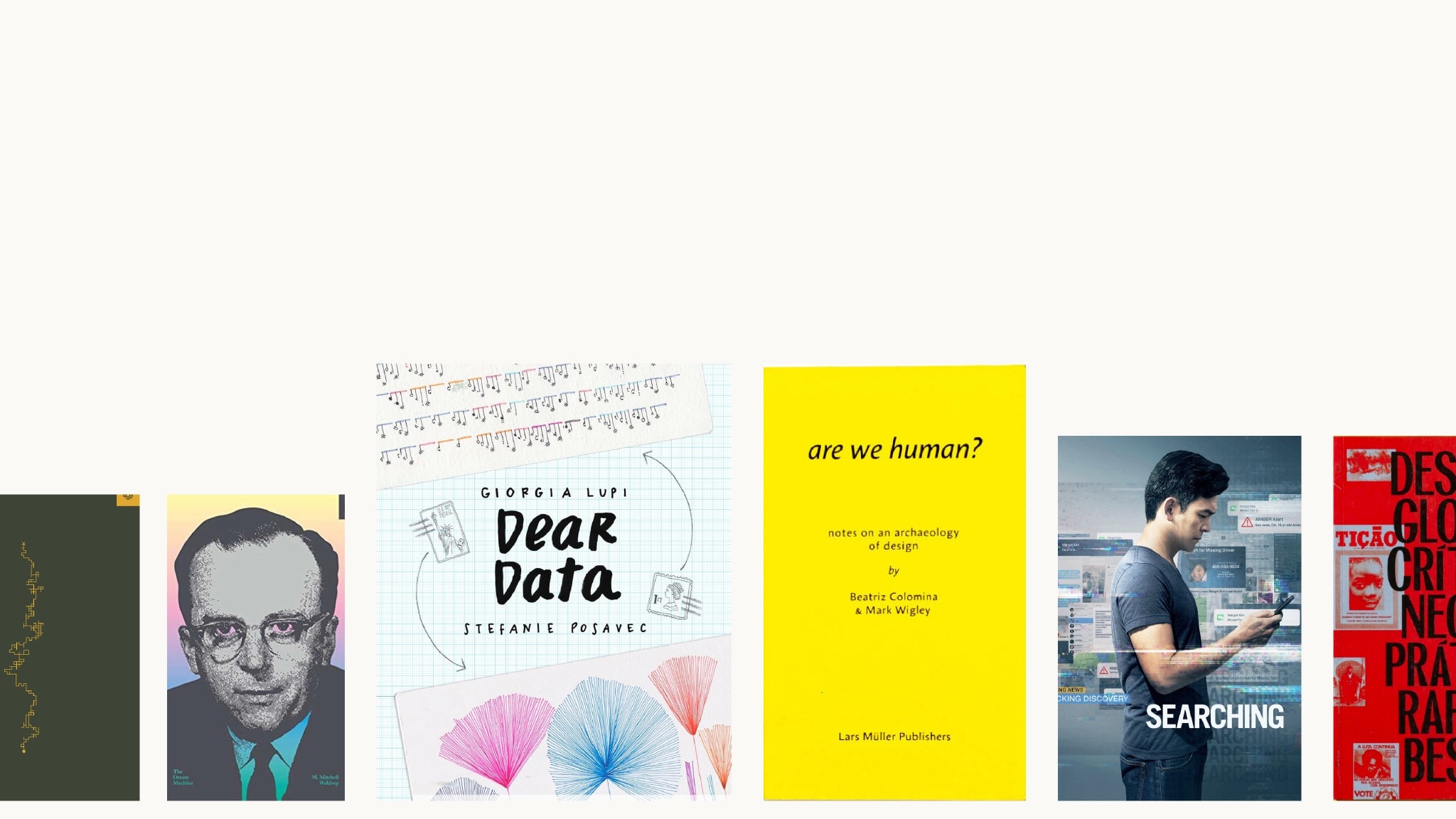
Even this talk wasn't made by me alone. The books I read, the movies, the code, the conversations I had: they're all in here. We forget that because of the myth of the lone genius, but knowledge compounds. It's people working together to get somewhere.
That's why I'm so excited about this moment. More people are going to be able to create software, contribute to it and bring their ideas to it. More people means more perspectives. Different people see different problems and imagine different solutions.
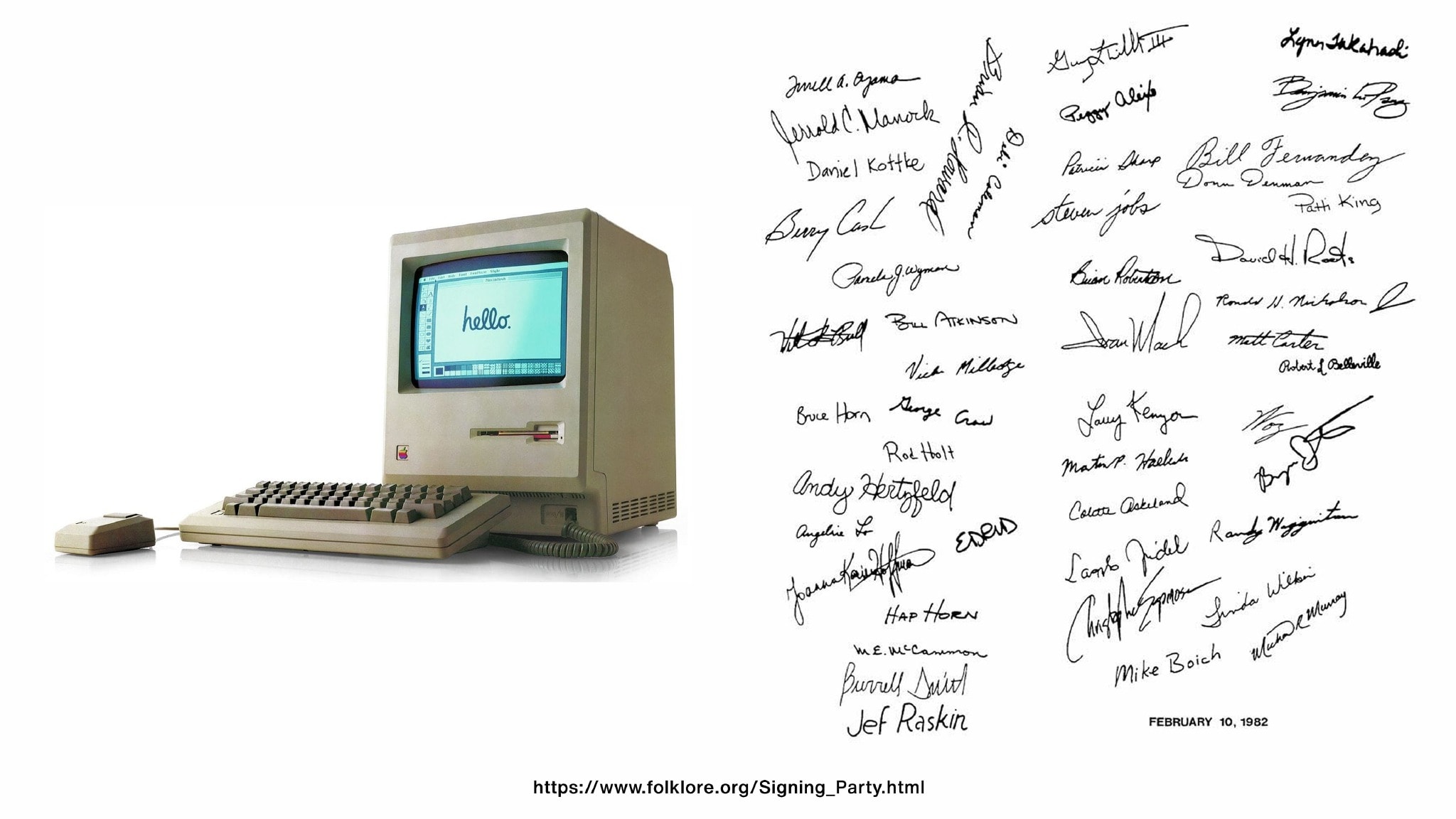
I love the story of the original Macintosh: the whole team signed a board and the signatures were molded inside every case. A product of a lot of people.
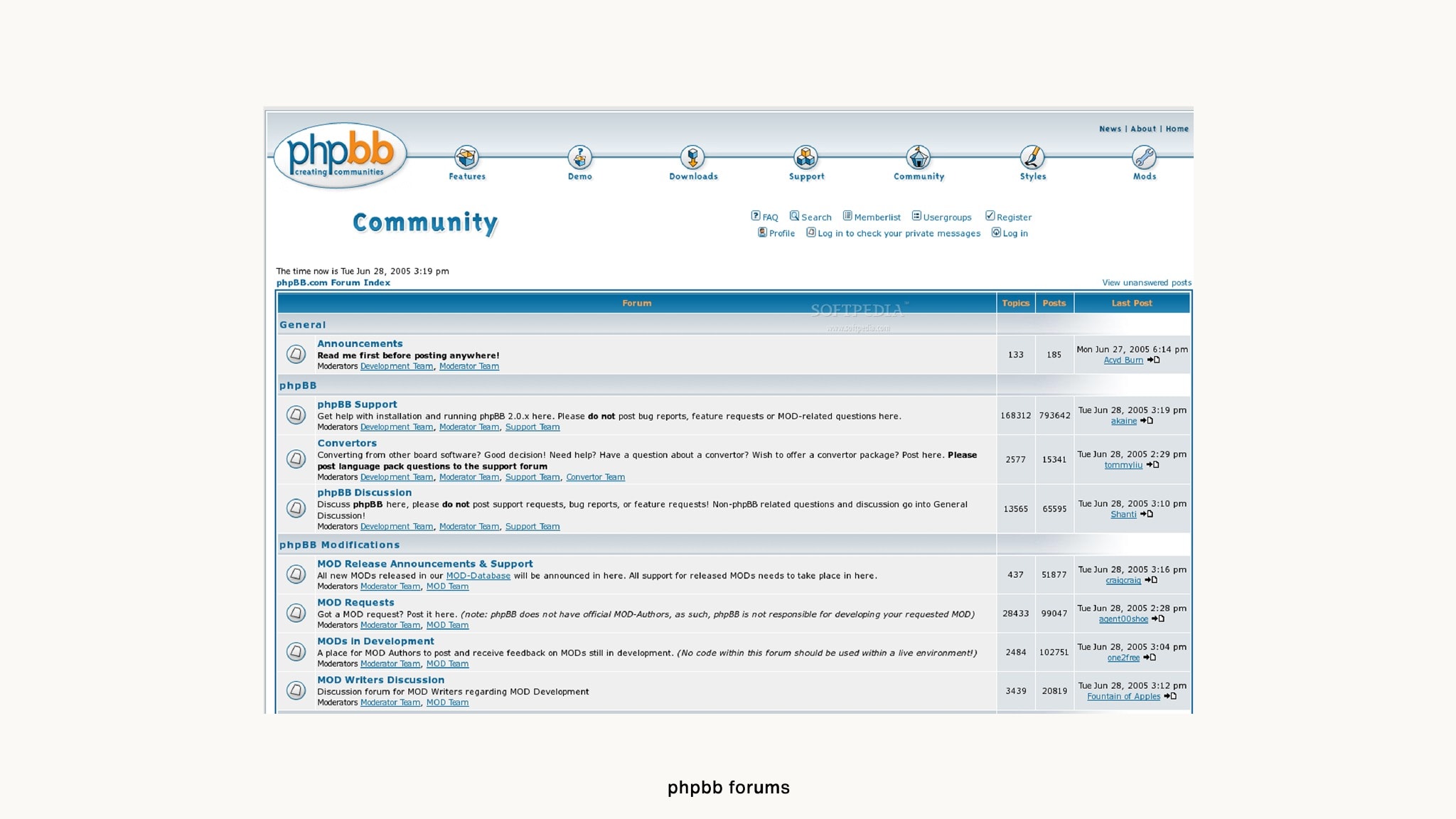
Another example I love is forums. I don't know if everyone here had that moment on the internet, but I remember searching a forum, finding a thread, asking a question. Someone was teaching me something, and all that knowledge was indexable and searchable. Now look at social media. It's polarizing us. It's pulling us apart and blocking us from seeing other perspectives. I miss that energy. How can we create tools that bring us together and help us organize ourselves collectively?
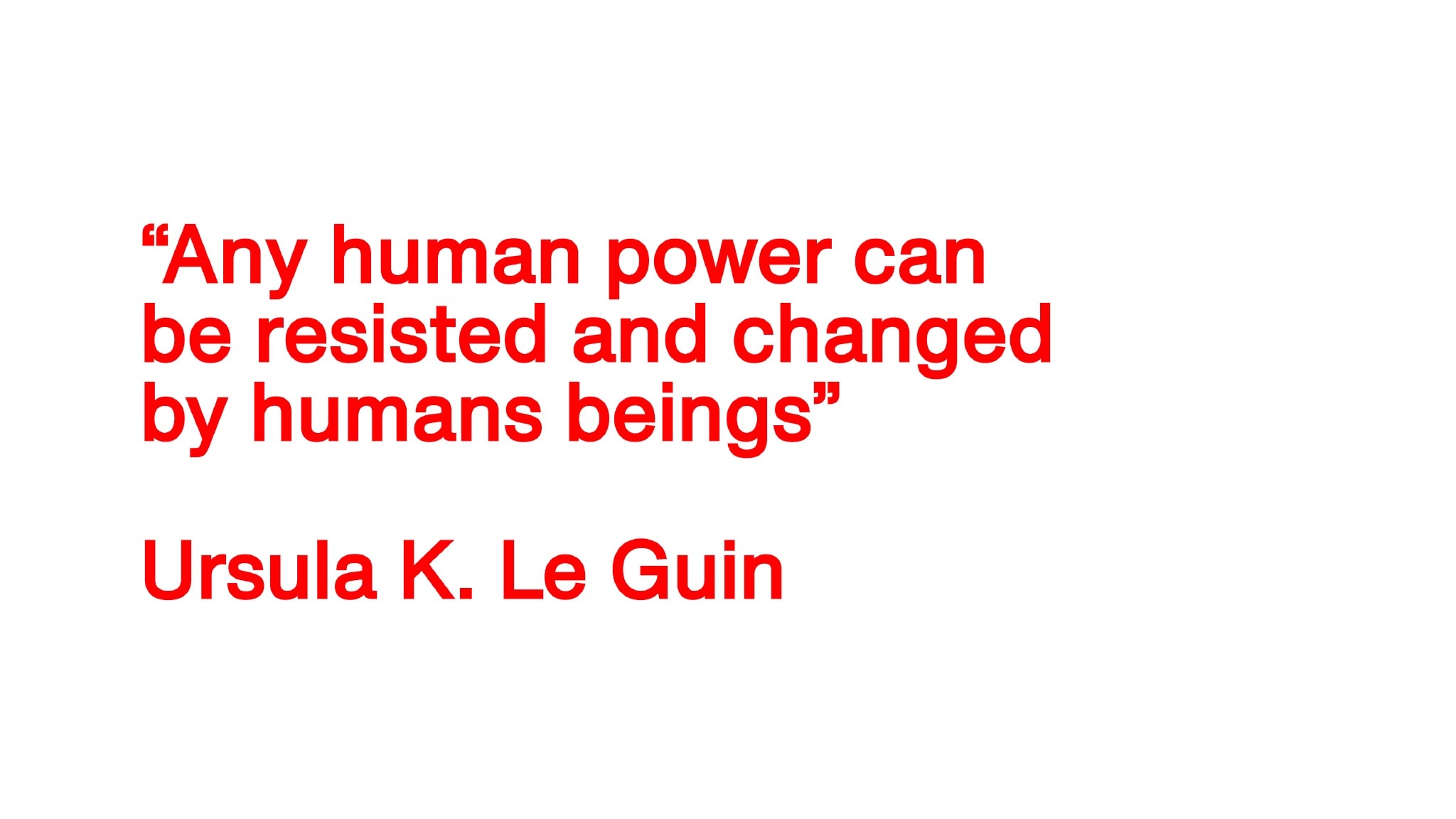
Because when we're organized, we have the power to challenge the things we don't believe in. Ursula K. Le Guin said it better than I can: any human power can be resisted and changed by human beings. It's not easy, but it's the only way change happens. If we want to change the sparkle icon, we can. We can start drawing, thinking and discussing, and propose something else.
We don't have to accept that corporations will decide what software should become, what interfaces we should use, or how we're supposed to interact with technology. We can question those decisions, create alternatives, and build the things we believe should exist.
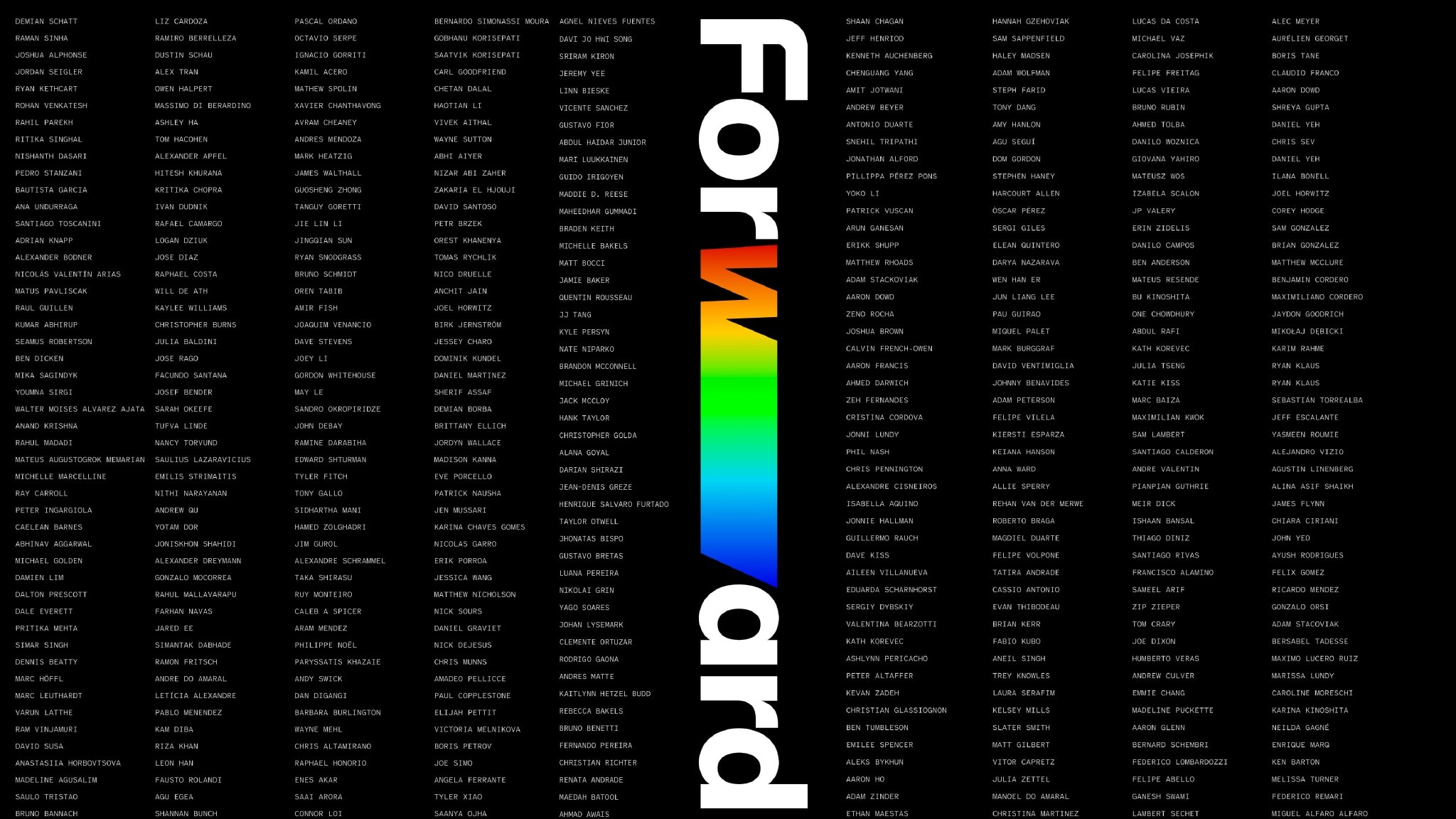
That's why I was so glad to be at Forward, in a room full of people building software. We even put the name of everyone there on the slide. I don't think one person or one company is going to imagine the perfect interface for the future. It's special to be in the same room, in person, talking about the tools we want to create.
As I said at the beginning, the tools we make also shape us, the same way stones shaped our hands. The tools we build now will shape our future as a species. So my question isn't what AI will become. It's what we want to become.
Did you like it? Subscribe to receive new posts